In the 18 months between Christmas Eve 1849 and June 1851, San Francisco burned to the ground seven times. In 1852 we put a phoenix on the city seal (SFFD Museum). Things went well until the great quake of 1906 and the fire that followed.
SF is a city of wooden houses packed wall to wall on windy hills, and in the 120 years since then the city has become known for many things, but not fatal building fires. San Francisco loses 3 to 4 people per year (0.42 people per 100,000) to building fires, about half the national average of 0.78 deaths per 100,000 people, (CDC).
7 City-Wide Fires in 18 Months Built SFFD
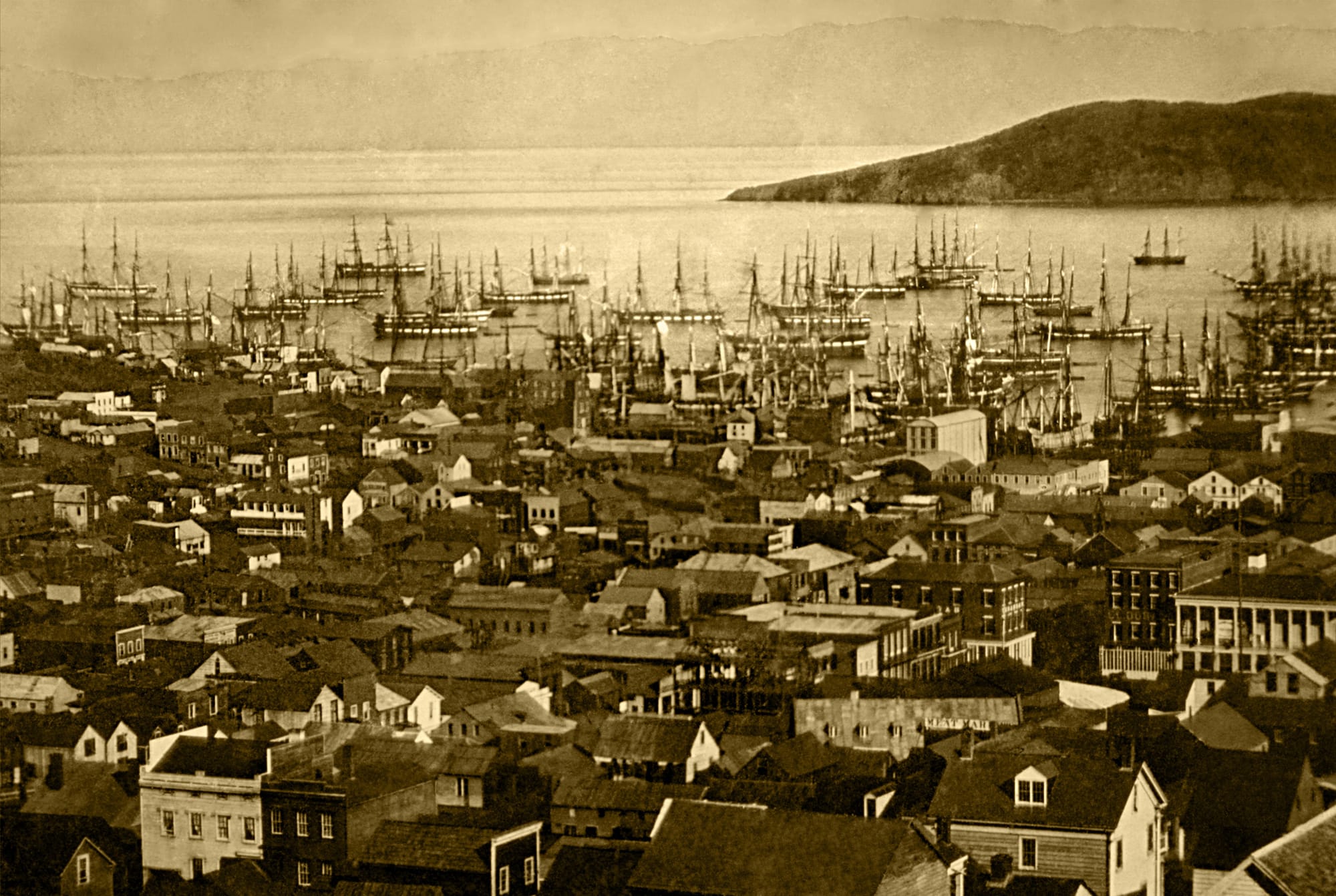
Gold Rush SF was built as canvas and lumber. The worst fire, on May 3 and 4, 1851, destroyed about 18 blocks and did $12 million in damage, around $490 million today (Museum of the City of San Francisco). Gory detail: Some of the dead were killed when trapped inside iron buildings that had been sold as safe because they were fireproof (Wikipedia).
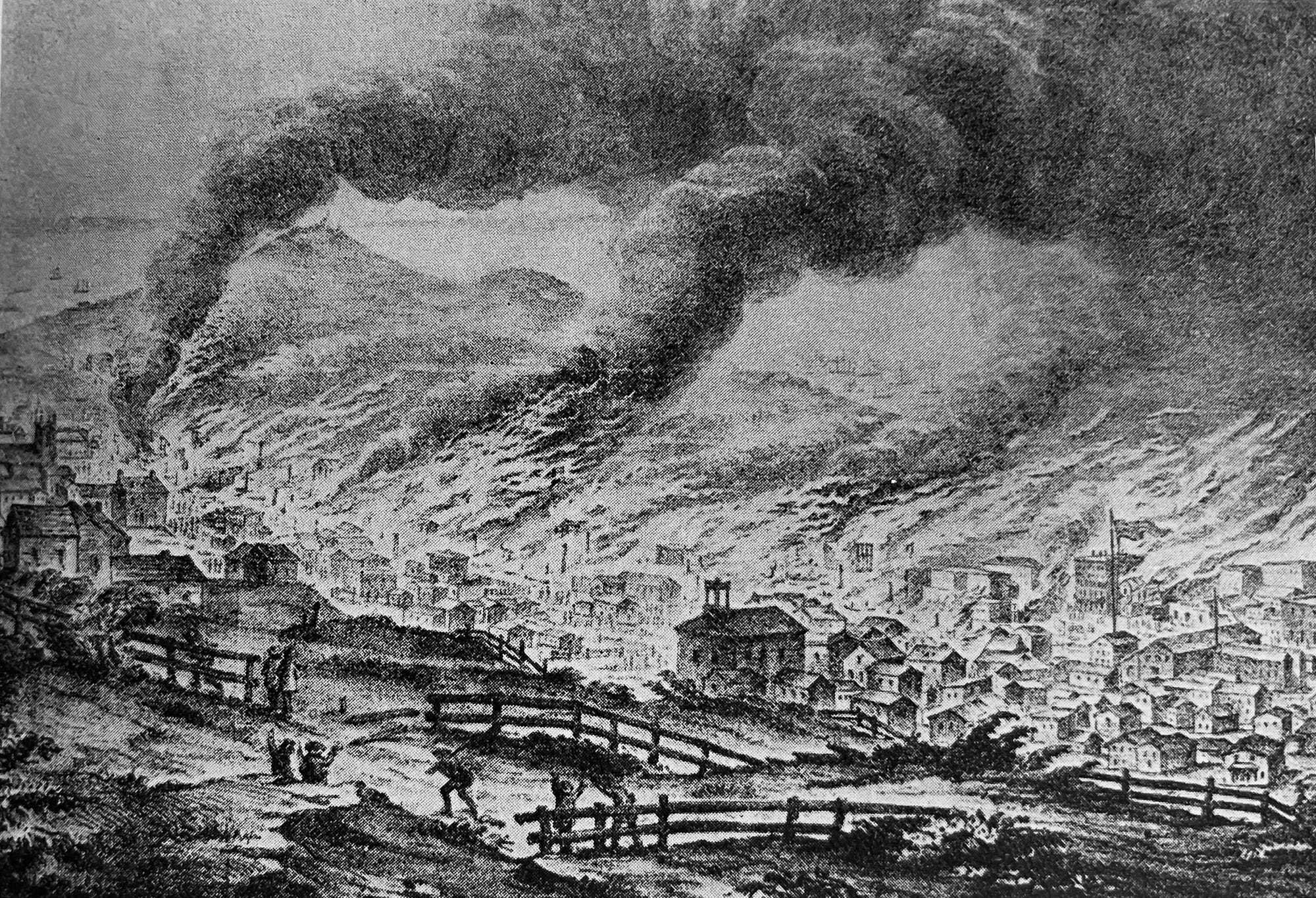
Each fire brought a new city rule:
- Volunteer companies formed the night of the first one.
- Then came a rule requiring six water buckets per household
- A cistern under Portsmouth Square
- A fine for refusing to help put out fires
- By 1853, a ban on wood-frame buildings downtown (Museum of the City of San Francisco).
In 1866 the volunteers gave way to a paid fire department.
1906 Was a Water Failure
The quake lasted about a minute. The fires lasted days.
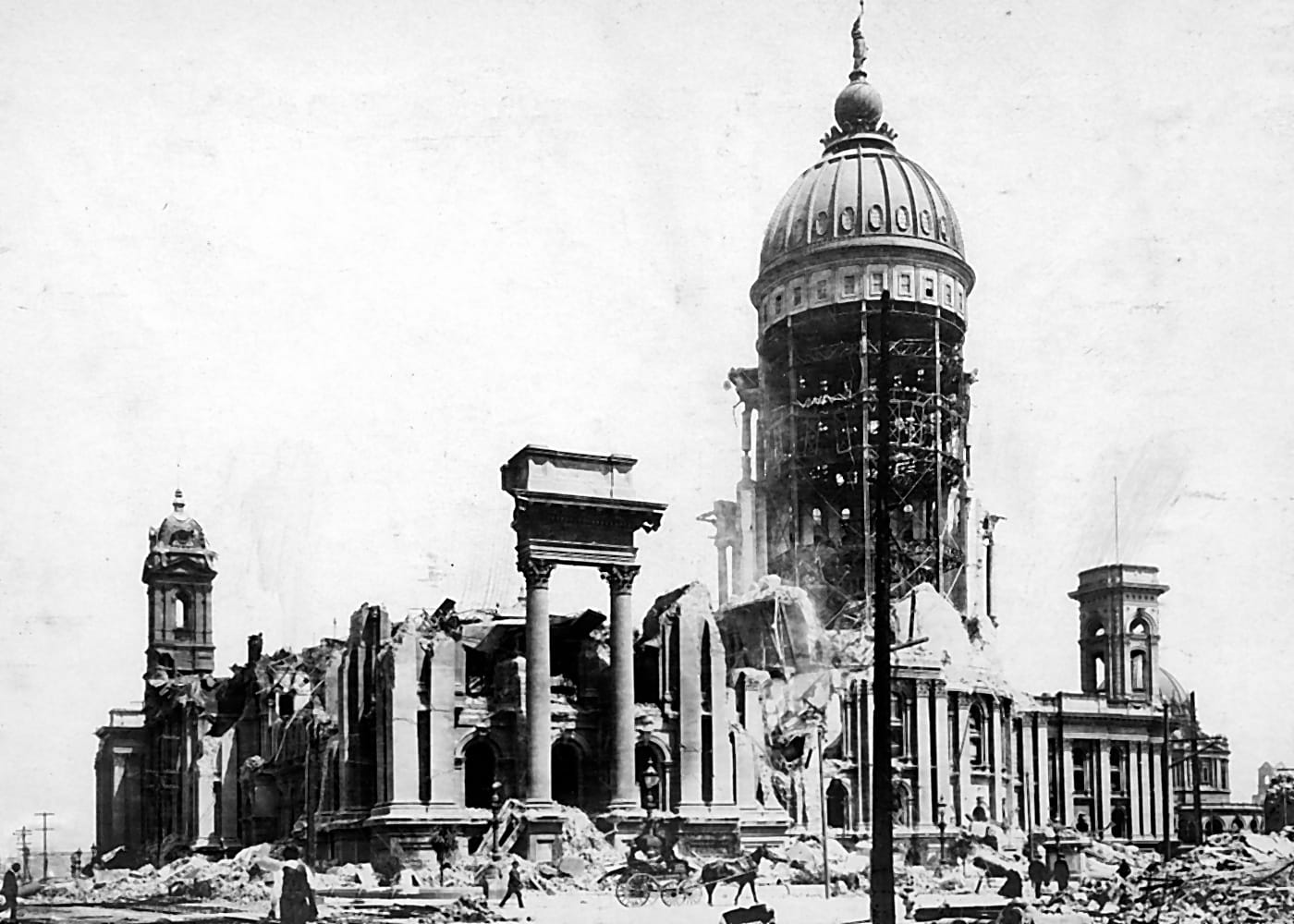
Fires caused fully 85 percent of the damage, because the quake broke the water mains (USGS Bulletin 324). One of the worst fires is rumored to have started with breakfast: a stove lit under a cracked chimney on Hayes near Gough in Hayes Valley. The ham-and-eggs fire took about 30 blocks, City Hall included.
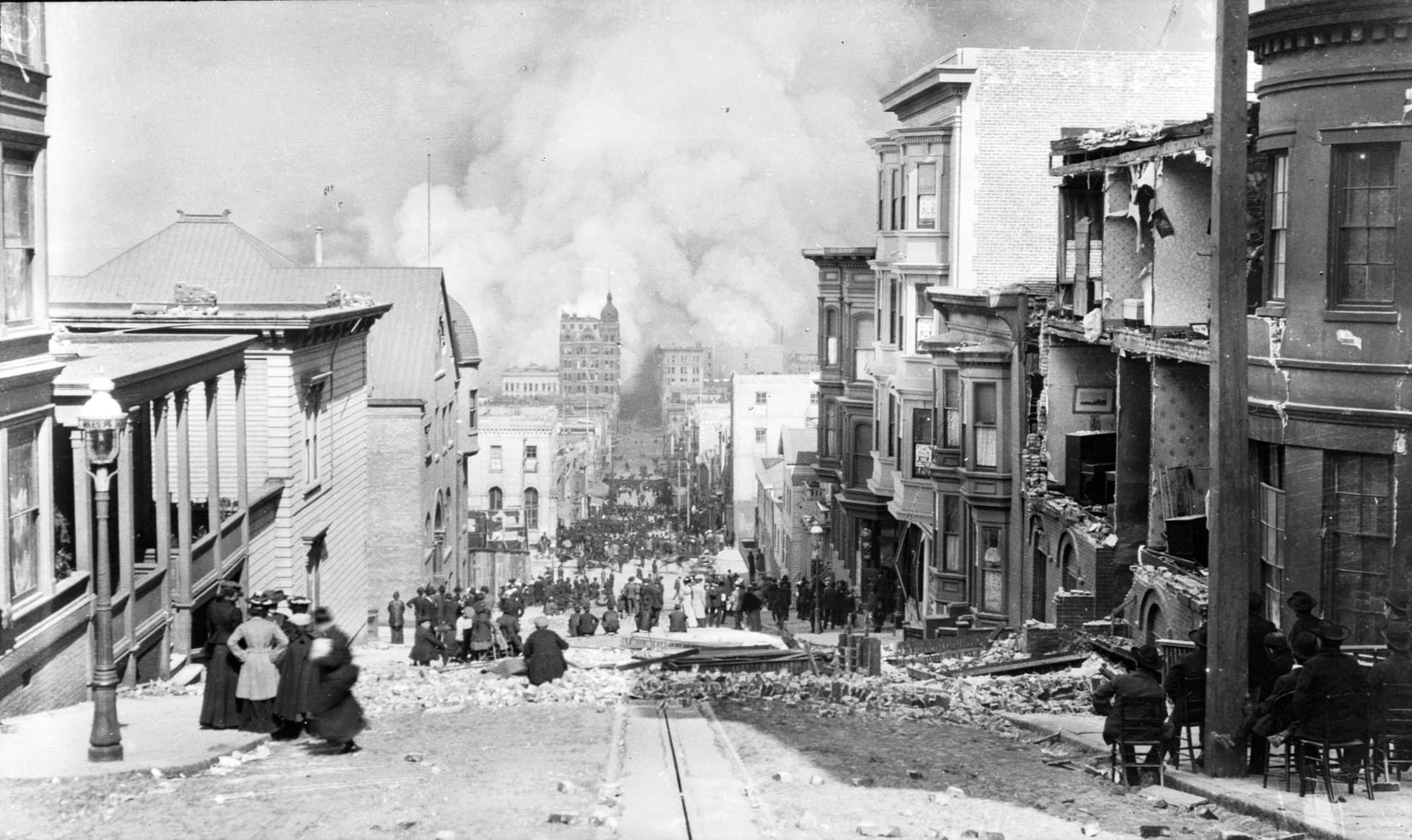
The official death toll from the '06 quake was 478. Gladys Hansen's research put it above 3,000, and in 2005 the Supervisors retired the old number (NPR).
The City Rebuilt Its Water Supply, Not Its Building Code
San Francisco passed on a tougher building code so it could rebuild fast.
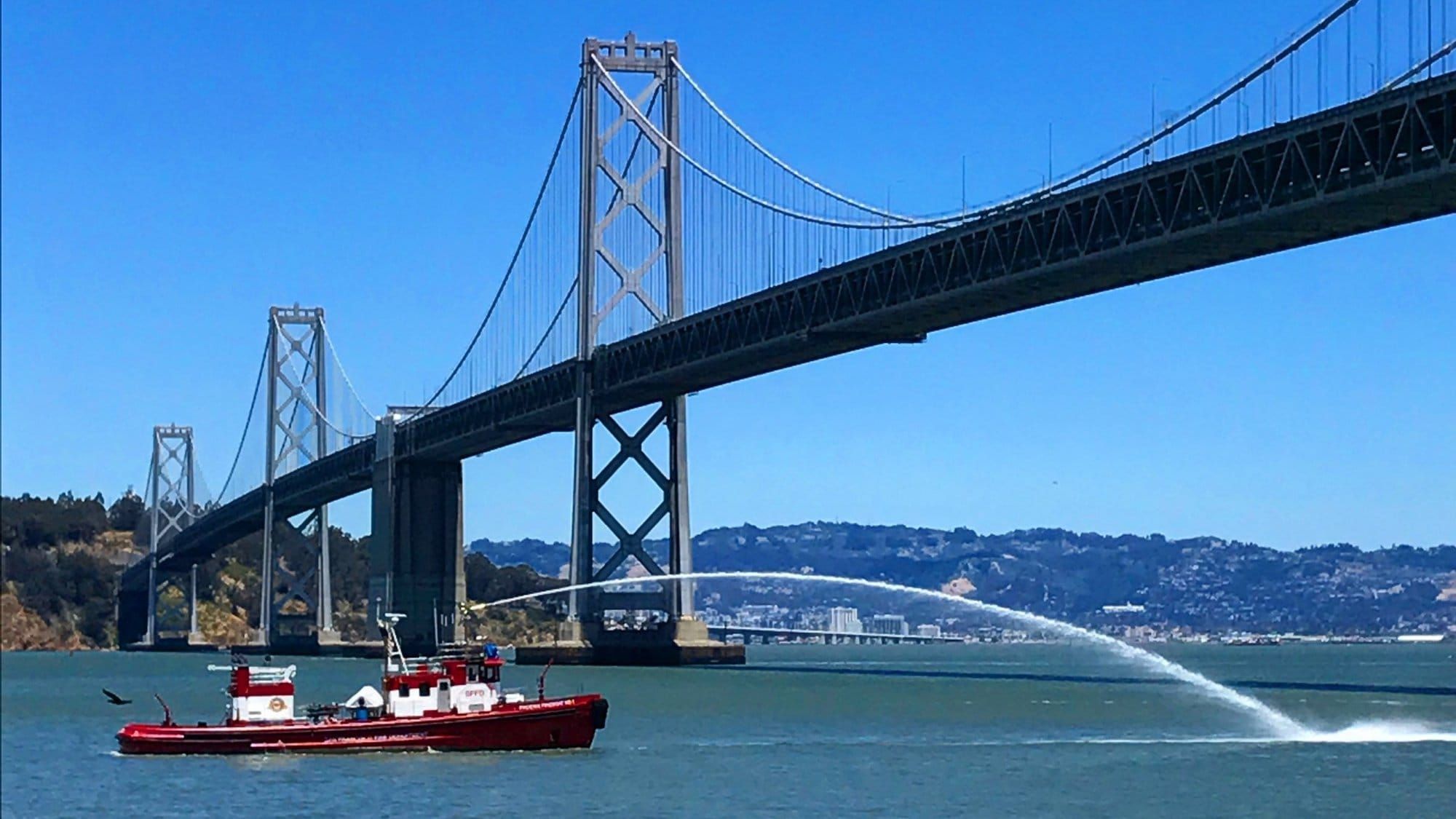
It spent the money on water: a $5.2 million bond in 1908 and, by 1912, a separate firefighting system with a reservoir on Twin Peaks, saltwater pumps on the bay and cisterns under the streets (Museum of the City of San Francisco).
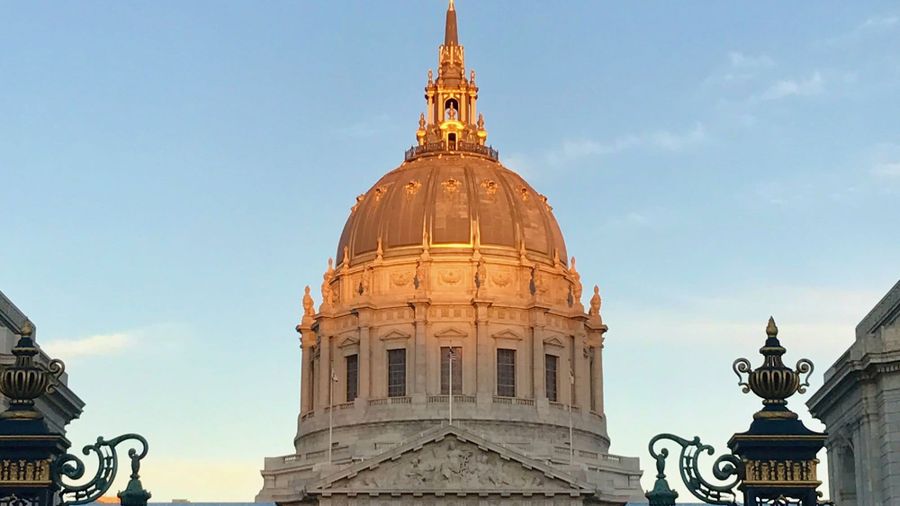
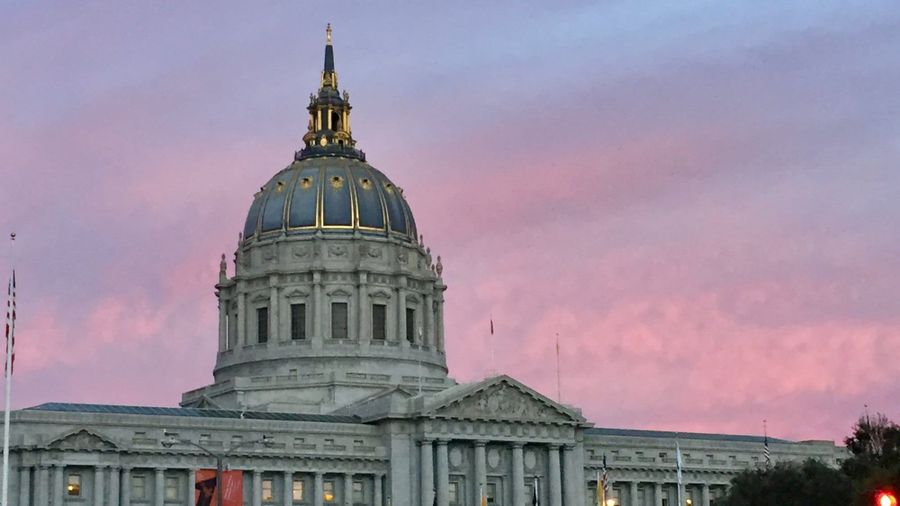
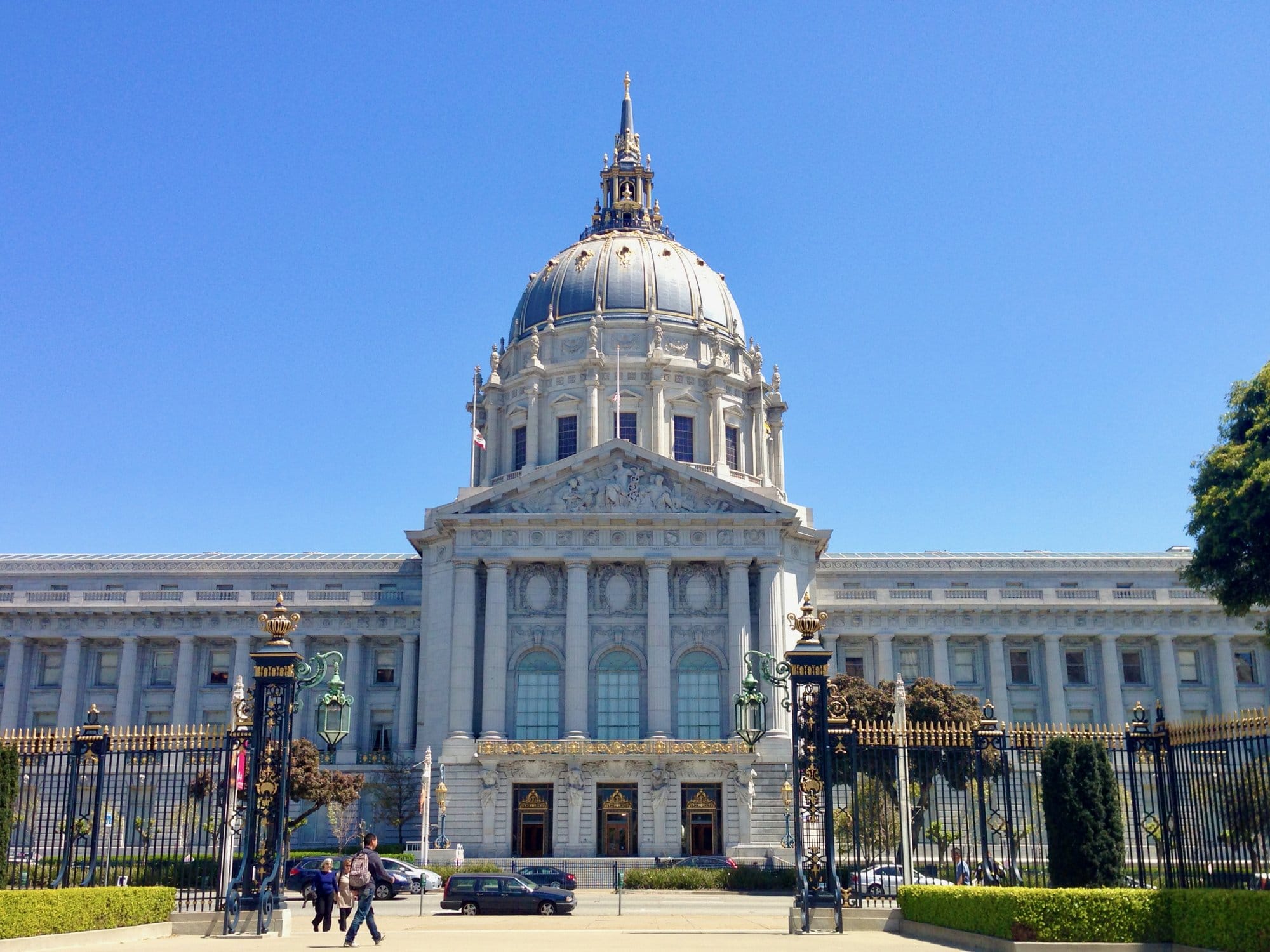
A new City Hall was finished in 1915.
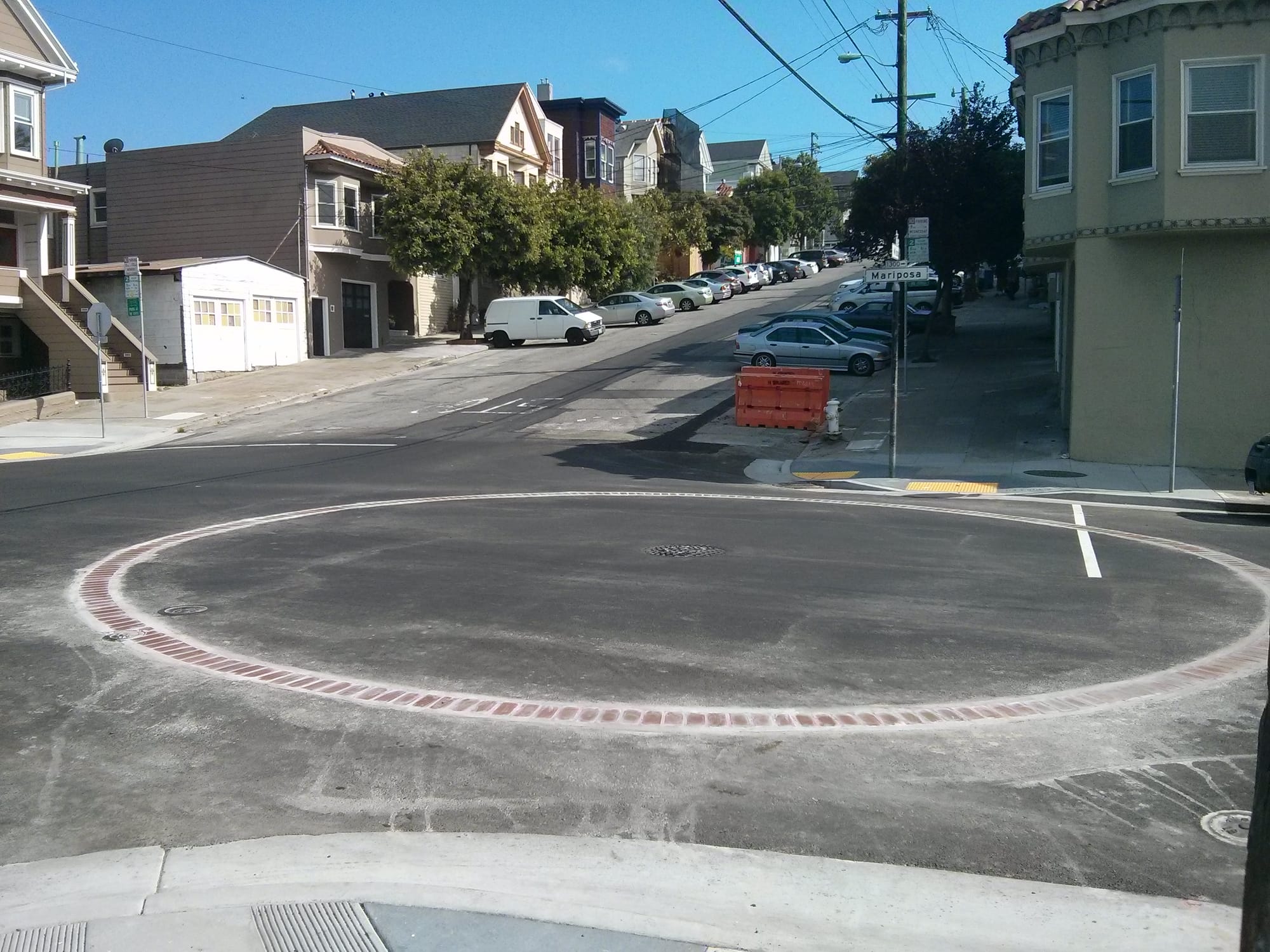
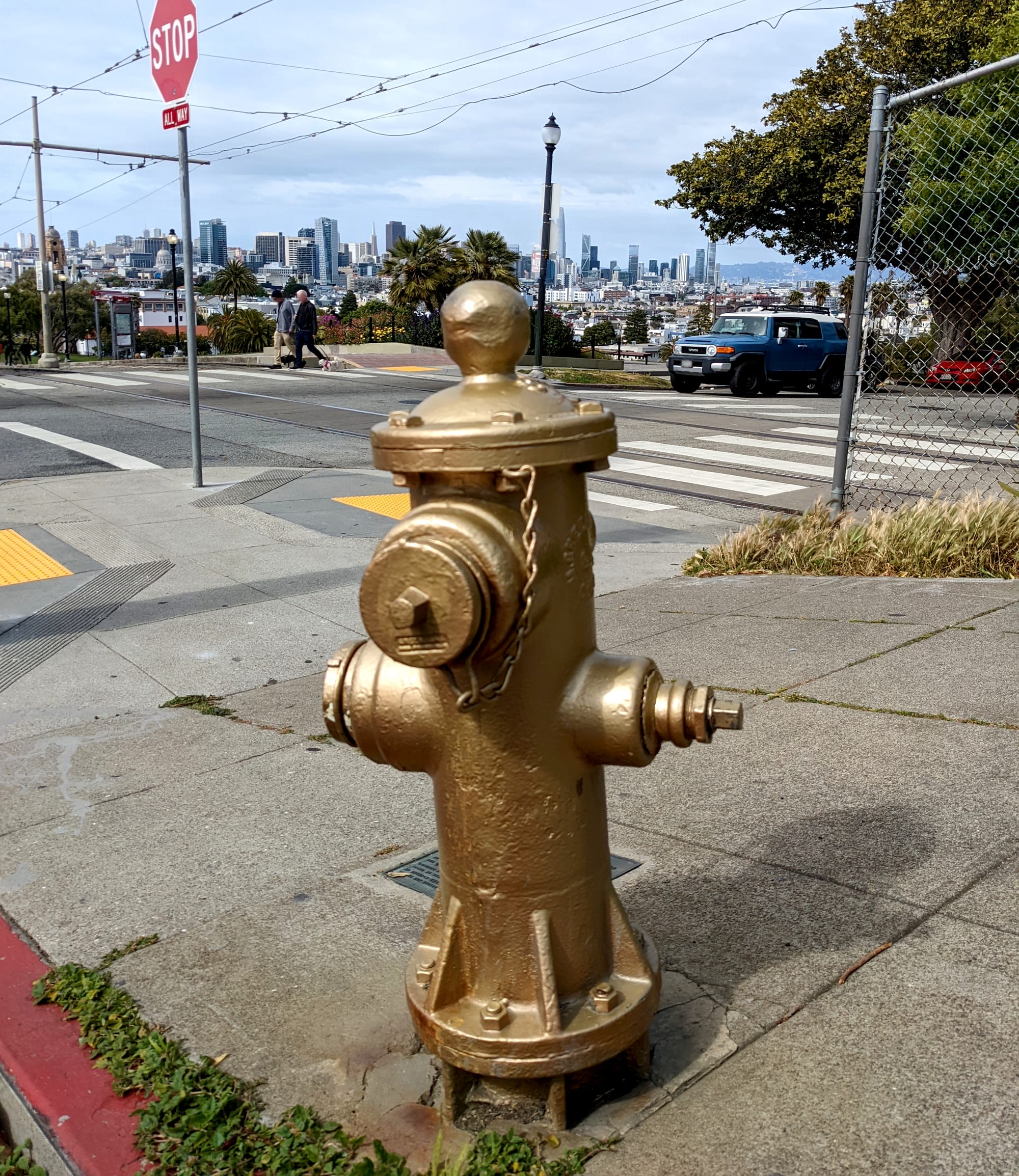
We walk over the auxiliary water supply system every day. The brick circles in intersections mark the cisterns, more than 170 of them, and the city recently added 30 more at about $1 million each (KQED). The hydrant at 20th and Church, the one that kept working in 1906 and saved much of the Mission, gets celebrated with a fresh coat of gold paint every April (Mission Local).
Since 1906, the Deadliest Address Has Been the Cheapest Room
We found three residential fires since 1906 that killed more than ten people. All three hit buildings serving the city's poorest communities.
- New Amsterdam Hotel, 1944: 22 dead. An arsonist set a fire by the rear stairs of a 78-room South of Market hotel at Fourth and Clementina, where rooms averaged about 8 by 11 feet. The arsonist was convicted (People v. Holman). No code change.
- Thomas Hotel, 1961: 20 dead. A cigarette set a bed on fire at 971 Mission, and an open stairway did what open stairways do. The building code rule requiring enclosed stairs didn't apply to old buildings. Nine months later it did, and it still does (Bureau of Building Inspection history).
- Gartland Apartments, 1975: at least 12 dead. Someone poured gasoline on a stair landing at 16th and Valencia and lit it. The building had already been cited for 38 violations. Nobody was ever charged (SFFD Museum).
The late 1990s brought a string of residential hotel fires instead of one big one. At the Delta Hotel, at Sixth and Mission, the standpipe and the sprinklers both failed (SFGate) during a 1997 fire.
As a result of the 1990s fires, by 2002 every residential hotel with three or more stories or 20 or more rooms had to have sprinklers (ordinance).
Most Fire Deaths Are in Houses, Not Towers
Fire still kills people here. Death certificates count 117 San Franciscans killed by fire from 1999 through 2020, 76 of them in building fires (CDC). That is three or four people a year, at home. Every one is a tragedy.
Where people die is not where you'd guess.
In the city's incident records since 2003, more than half the building-fire deaths were in single-family houses and duplexes, and nearly all were in buildings with no sprinklers (DataSF).
The Newest Rule Followed Two Fires That Killed No One
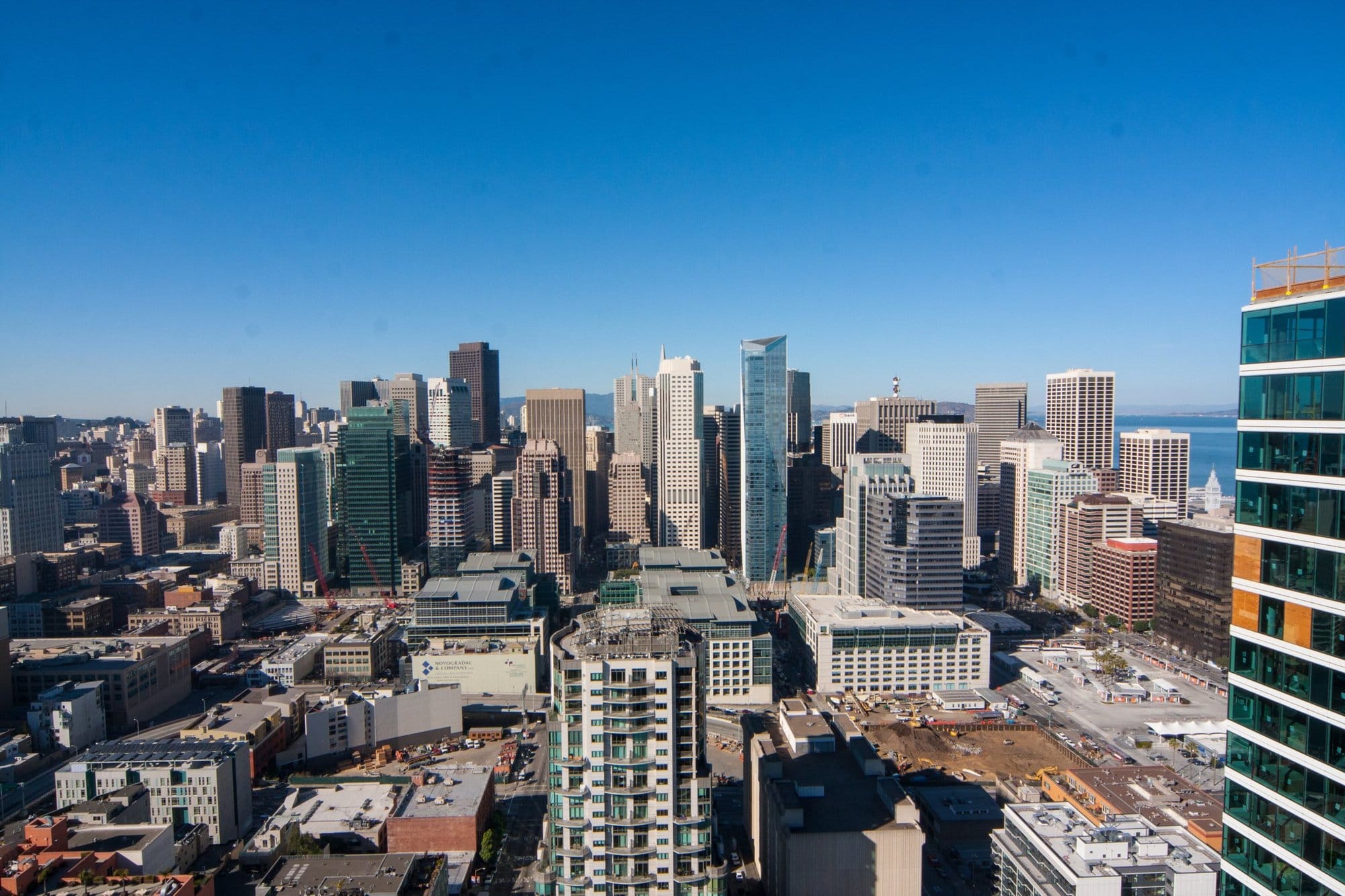
The most recent code update came from two fires that killed no one. Golden Gateway - towers without sprinklers - burned in 2018 and again in 2020, when a fire left 23 units at 440 Davis Court severely damaged (NBC Bay Area).
As a result, older residential high-rises now need sprinkler permits by 2032 and installation of full sprinklers by 2035 (SFFD). What that means for owners: Pre-1975 Buildings & SF Fire Code Update.
The Next Code Update Should Be Unwritten
Every earlier code change on this page followed deaths. The latest code update covers about 126 towers, and the city's incident records show no fire death in any of them since 2003 (DataSF). Those records may miss some deaths, so read them for the pattern and not the count.
The price to updgrade is real. The Supervisors' budget analyst put it at $15,000 to $224,900 per home (Chronicle), or $96.75 million to $1.3 billion across the city (our fire code update).
Concrete towers already hold most fires where they start: flames stayed in the room of origin in 94 percent of high-rise apartment fires without sprinklers and 98 percent with them (NFPA Journal).
A technical advisory council is studying alternatives and is due to report in December 2026.
The question is where the next dollar spent saves the most lives. The evidence points to single-family houses and small apartment buildings, where people are still dying, and away from the towers, where they are not.
Writing a rule before anyone dies is a noble instinct.
At a cost of up to $1.3 billion, for buildings where the records show nobody has died, it is the wrong rule.
Where The Big Fires Happened in SF
Tap a dot for the story. Fourth and Clementina and Howard and Eighth are placed at the intersection.
We burned down eight times. Then we spent 120 years becoming very hard to burn.
Building Characteristics to Consider for Fire Safety
Concerned about where you live? Here are some building characteristics to consider when you think about fire safety.
- Sprinklers, and how many. Full sprinklers, sprinklers only in the corridors or no sprinklers.
- Enclosed stairs and doors that latch on their own. Sounds basic, but that's the lesson of the Thomas Hotel fire in 1961.
- Open violations at DBI and SFFD. A long list of past or current violations may offer insights into building management and care.
- An older high-rise's 2035 plan. Ask about retrofits or compliance with future rules, and whether there's a bid and a way to pay for it, or just a deadline.