In 2022, the SF Board of Supervisors updated the San Francisco fire code. As homeowners and residents, we share the city's commitment to fire safety. The fires at the Gateway complex that prompted this legislation were serious.
The current ordinance can be improved to protect lives without displacing homeowners or forcing sales. Fire Safety is Good! — let's get this right.
The ordinance, as written, creates unintended harm — it disproportionately impacts elderly residents and forces sales at a loss.
Other Cities Solved This Already For Way Less — Los Angeles's "Dorothy Mae" ordinance has protected escape routes at a fraction of the cost for 40 years. San Francisco can learn from their experience.
Formal Cost Study — None was done before passage. The city's first real study arrived in August 2026 and puts costs anywhere from $15,000 to $224,900 per unit, depending on the building. Owners deserve clarity before the 2032 permit deadline.
Amend, Not Repeal — Could common-area sprinklers or trigger-based retrofits during major renovations achieve safety goals without massive costs and impacts?
What About Rental Buildings and Renters? — The fires that prompted this legislation occurred in rental buildings, yet condo owners—many of them seniors on fixed incomes—bear the financial burden.
We're grateful to Supervisors Sherrill and Sauter for engaging with residents on this issue, and hope the city can find a balanced, fair, and safe solution.
What Changed in 2026: More Time, a Real Cost Study and a Seat at the Table
The mandate still stands. What moved this year is the schedule, the math and who gets to weigh in. Updated October 27, 2026.
- The deadlines moved. The 2025 San Francisco Fire Code, approved by the Board of Supervisors in March 2026, pushes permit applications from January 1, 2027 to January 1, 2032 and water supply and riser installation from 2031 to January 1, 2034. Full installation is still due January 1, 2035. SFFD's compliance page has the current schedule.
- Hardship now counts. The amended code (Sec. 1103.5.4.4) lets the Fire Marshal weigh financial hardship and resident displacement when reviewing alternate methods and extensions. SFFD reviews requests case by case.
- Owners have a seat at the table. Ordinance No. 74-26 (File No. 260216), signed April 30 and effective June 1, 2026, created an 11-member Fire Code Technical Advisory Council that includes property owners, tenants, HOAs, design and construction professionals and City agencies. It first met September 18, 2026, owes findings within 90 days of that meeting and sunsets after one year unless extended.
- The cost study finally exists. The Budget and Legislative Analyst's August 3, 2026 report, requested by Supervisor Sherrill, estimates $15,000 to $224,900 per unit for a 50-unit building, depending on existing plumbing, water service, pumps, pipe concealment, asbestos and relocation. Citywide, that's $96.75 million to $1.3 billion. Read the 2026 BLA report.
- The count changed too. SFFD now identifies 129 potentially affected buildings: 51 appear to be condos and 78 rentals. 51 buildings already have sprinklers covering at least a quarter of their square footage, which can lower costs.
- Other cities found more cost-effective paths. Per the BLA, Honolulu and Florida let buildings reach a level of safety comparable to full sprinklers through engineered alternatives such as partial sprinklers, alarms and egress upgrades, certified by a fire protection engineer. San Antonio and Houston reached compliance by exempting condo units. San Jose applied a full retrofit to all residential high-rises, a much smaller set of 11 buildings, and finished in ten years.
- The BLA put repeal on the table. Its policy options for the Board: repeal the ordinance, allow an NFPA alternative life safety approach approved by a majority of owners, have the Council profile each building's likely cost, or offer low- or no-interest City loans.
What owners should do now: get your board talking to a fire protection engineer about your building's actual condition, track the Council's findings this winter, and budget from the 2026 BLA ranges rather than the headlines.
San Francisco High-Rise Sprinkler Mandate Background
The 2022 ordinance (File No. 220038) requires automatic sprinklers in all residential high-rise (12 stories or more) home built before 1975. It was motivated, in part by fires in 2018 and 2020 at The Gateway, a rental complex.
While well-intentioned for fire safety, the mandate creates severe unintended consequences: estimated costs of $15,000 to $224,900 per unit in the city's 2026 study (some HOA estimates run $300,000+), displacement of elderly residents and no city funding mechanism to assist owners.
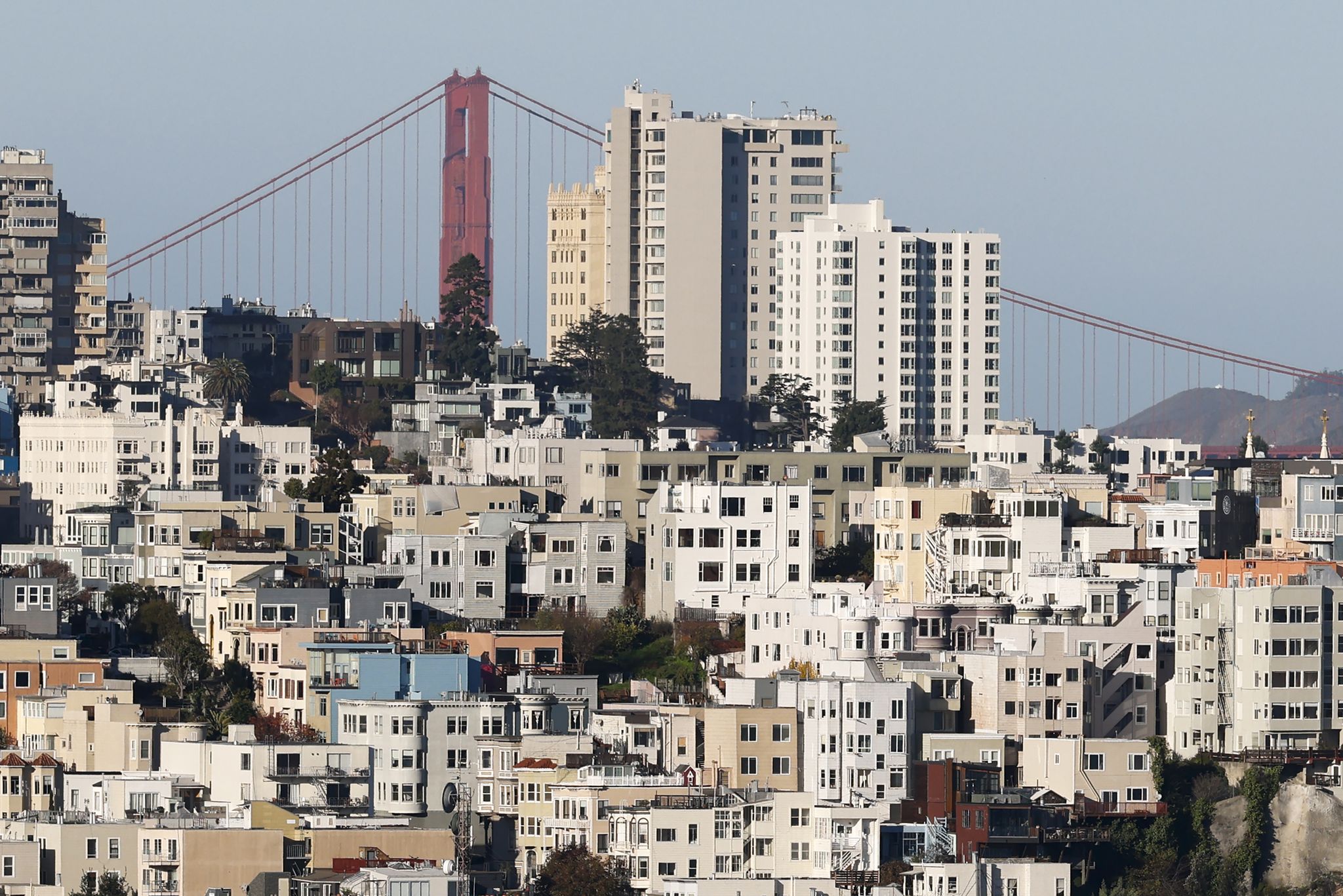
The ordinance was estimated in 2022 to affect 126 buildings (~9,800 units); SFFD's 2026 count is 129. The majority are in SF Supervisor Districts 2 and 3, which are in the North (district 7) and NorthEast (district 8) Areas of San Francisco in our MLS.
Links to articles, newest at top:

September 2026
 J.K. Dineen
August 10, 2026
March 17, 2026
 Jay Barmann
March 17, 2026
 Jaxon Van Derbeken
March 3, 2026
February 2026
J.K. Dineen
December 16, 2025
 Michael
November 21, 2025
 [email protected]

November 20, 2025
 J.K. Dineen
November 17, 2025
 Sergio Quintana
November 17, 2025
Link to Original 2016 Board of Supervisors Policy Analysis Report Re: Policies and Impact of Installing Sprinklers in Residential Buildings
Original document source : https://sfbos.org/sites/default/files/BLA_Automatic_Sprinklers_Policy_Report_112116.pdf
Some Historic Links About Fires & Fire Safety in San Francisco from KQED
 Ted Goldberg
July 15, 2024
 Ted Goldberg
April 2, 2018
 Ted Goldberg
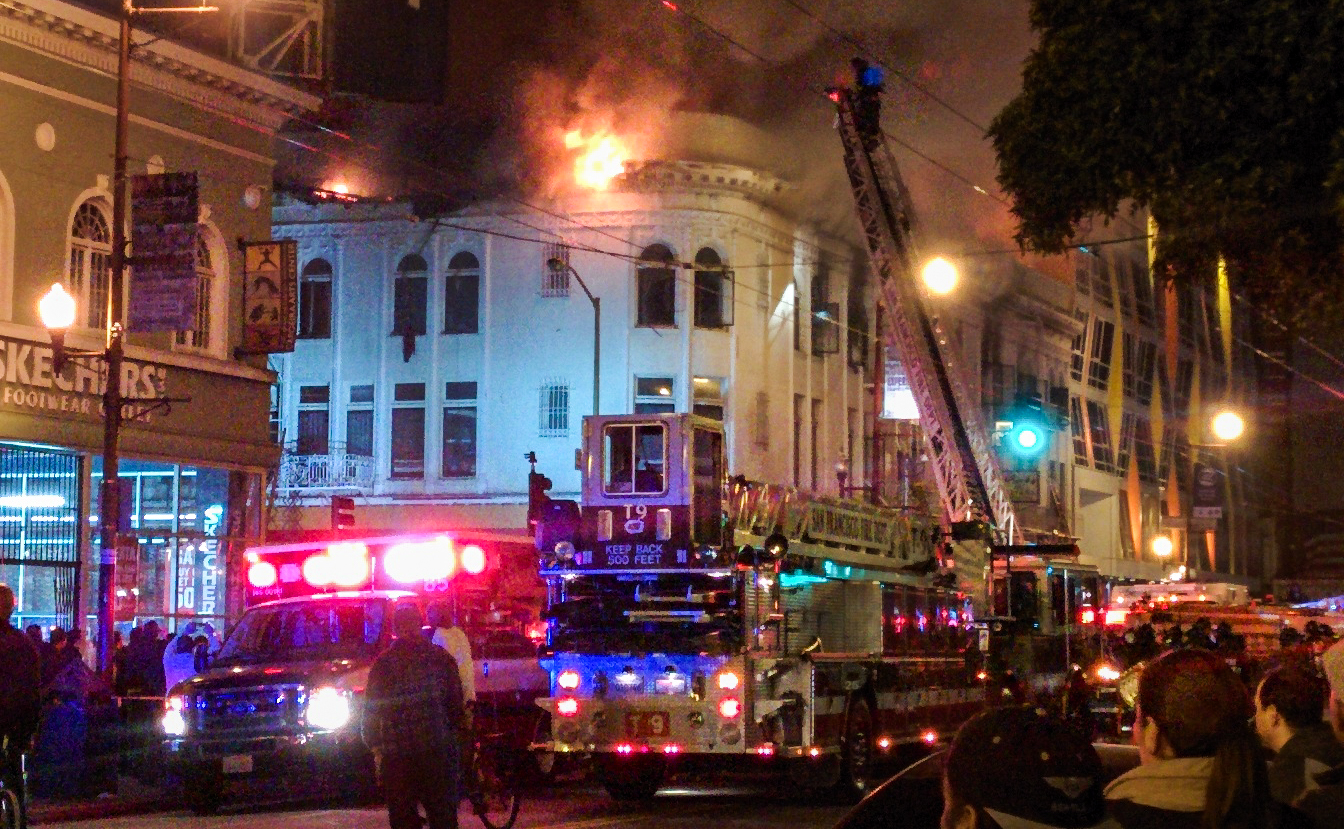
Nov 21, 2016
 Ted Goldberg
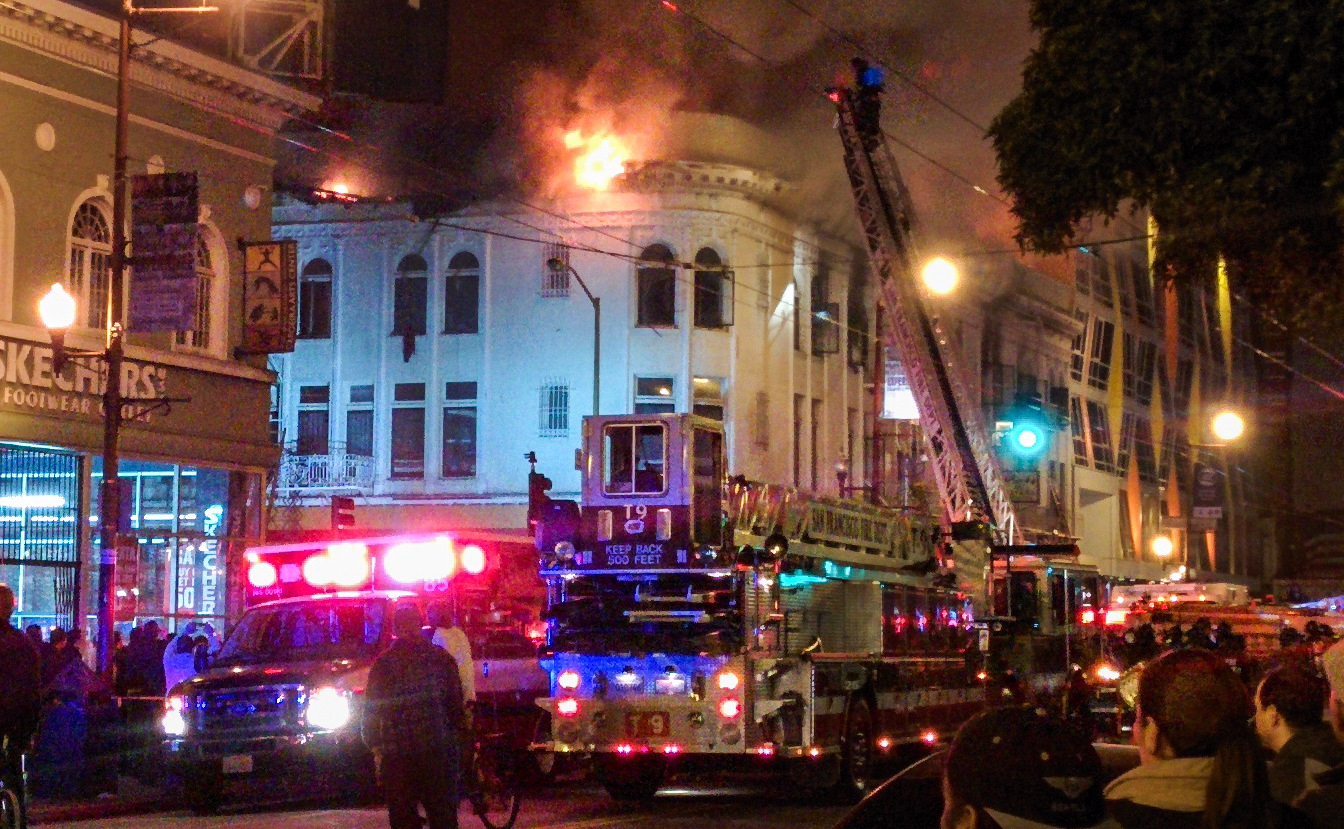
April 20, 2015
What the Ordinance Requires
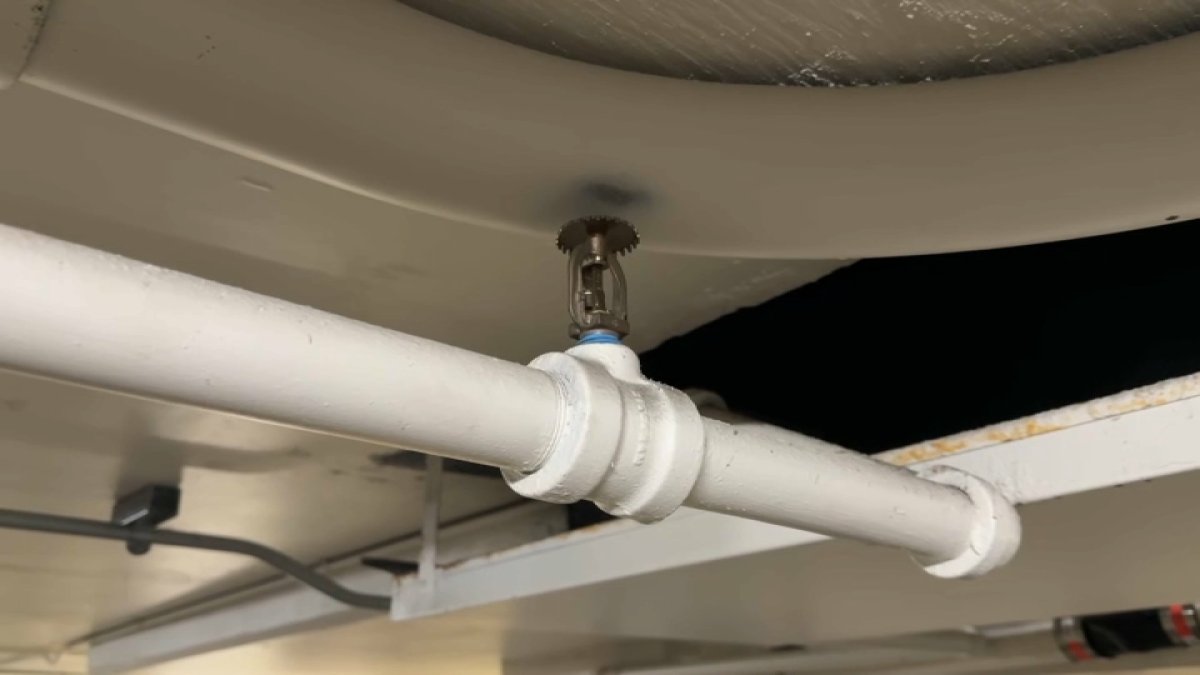
- Full automatic sprinkler systems in EVERY room of EVERY residential unit
- Applies to high-rise buildings (120+ feet) built before 1975 without two-hour fire-rated stairwells
- Permit applications due by January 1, 2032 (was 2027); water supply and riser by January 1, 2034 (was 2031); full installation by January 1, 2035
- 126 buildings identified in 2022; SFFD's 2026 count is 129, of which 51 appear to be condos and 78 rentals; majority in Supervisors Districts 2 and 3
Sponsors & History
Sponsored by Supervisors Peskin, Chan, Mandelman, Melgar, and Walton. Passed in 2022 following fires at the Gateway apartment complex (2018, 2020). The Building Inspection Commission voted unanimously to recommend approval.
The Gateway Complex Fires That Prompted This Legislation
"The vast majority of fires were not in buildings that would be impacted by the sprinkler ordinance" — SF Standard
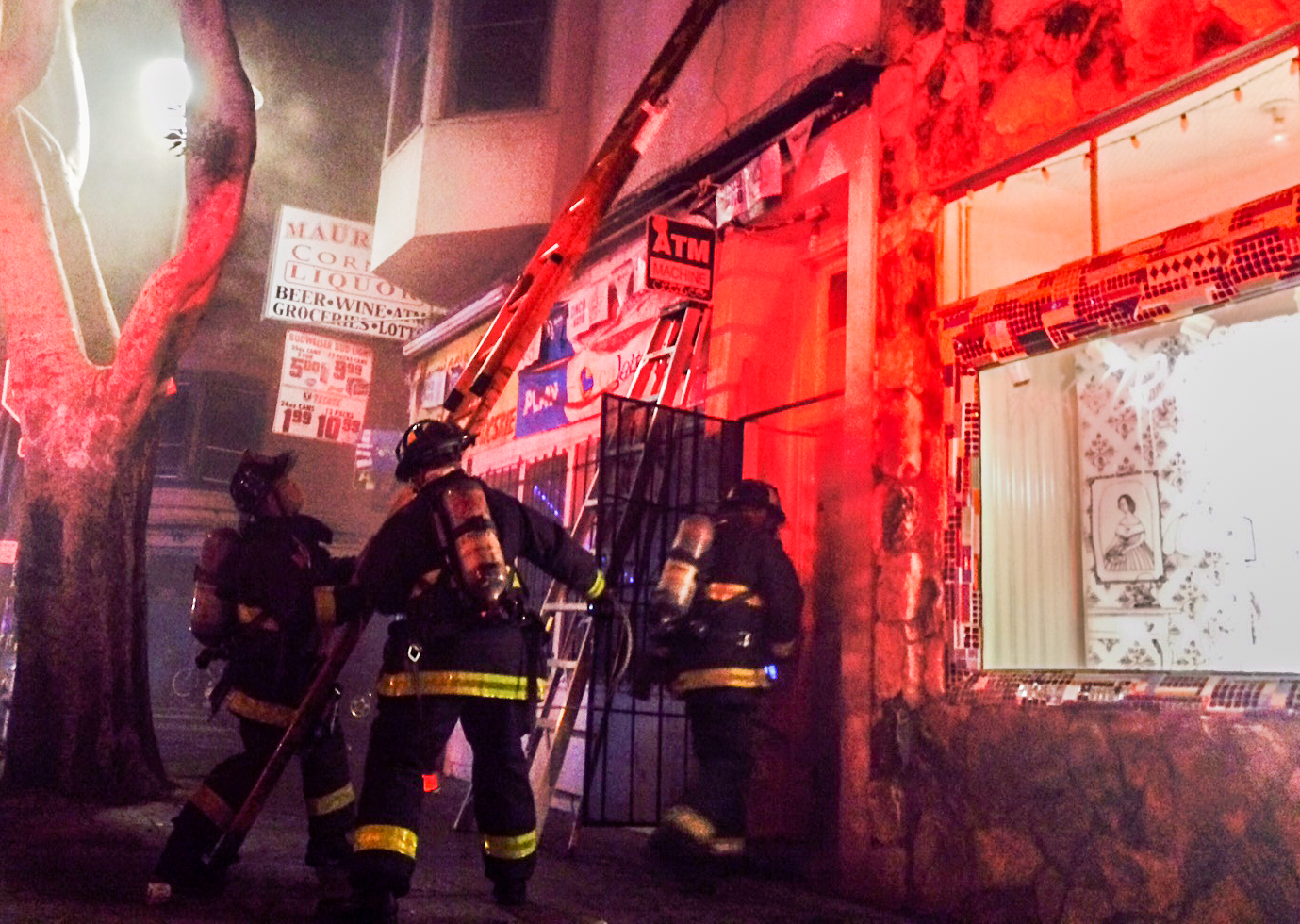
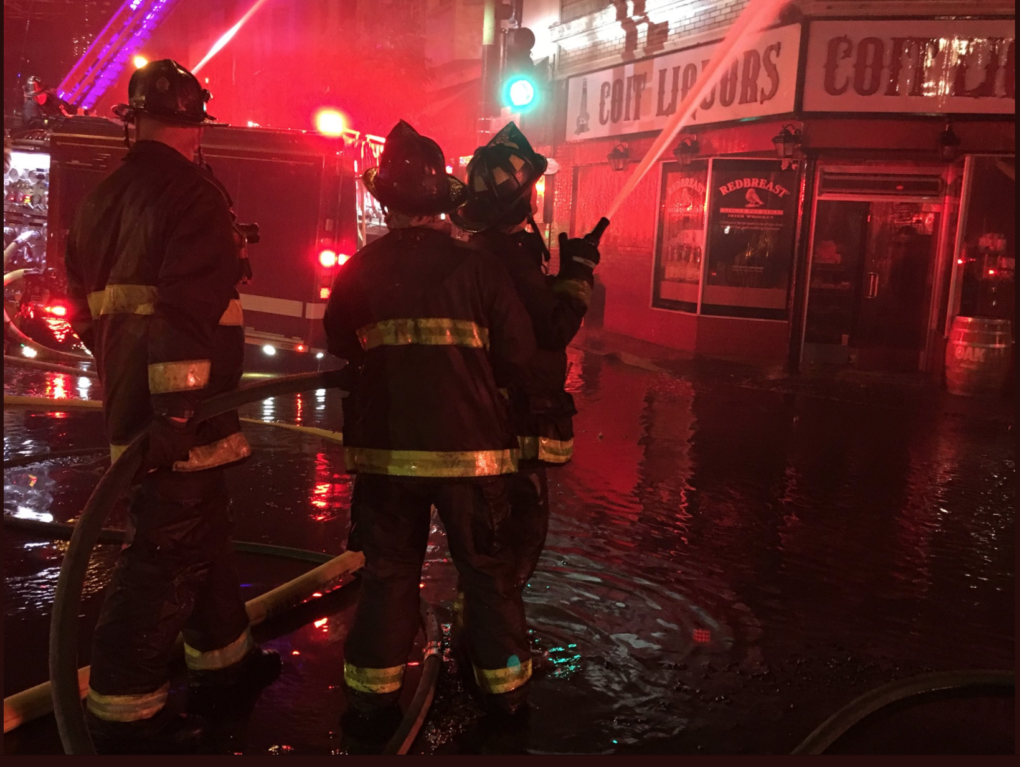
October 2018: Fire spread from 12th to 16th floor; 30 units displaced; no deaths. Elderly residents trapped; evacuation difficulties documented.
November 2020: Second fire in same complex; 5 injured, 15 displaced. E-scooter battery suspected cause. Supervisor Peskin pledged sprinkler legislation.
Estimated Costs To Implement Legislation As Written
Source: 2016 BLA Report (costs have tripled since then per Fire Marshal Chad Law)
Additional Cost Considerations
- Opening walls/ceilings for piping: doubles base cost
- Asbestos/lead abatement (common in pre-1975 buildings): $10,000-$50,000+/unit
- Underground water infrastructure on hills: up to $150,000 for special connections
- Fire pumps for tall buildings: ~$75,000
- No City loan program exists (unlike seismic retrofit program)
- Monthly HOA increases estimated at $2,500+ if financed over 10 years
How NYC, LA, & Other Cities Handle This
Los Angeles: "Dorothy Mae" Ordinance (1984)
After a 1982 fire killed 25 people, LA required partial sprinkler systems in pre-1943 buildings of 3+ stories:
- Sprinklers in corridors, stairwells, and above apartment entry doors only
- NOT required inside individual units
- Much lower cost; minimal displacement
- Focuses on keeping escape routes clear—the primary cause of deaths in corridor-style buildings
New York City: Local Law 26 (2004)
- Applies to commercial/office high-rises 100+ feet (post-9/11 response)
- 15-year compliance window with interim reporting
- Exemptions available for structural hardship or landmark buildings
- Residential retrofit proposal (Int. 1146-B) faced strong opposition and stalled
Other Approaches
- Redwood City: Loan forgiveness program with rent stabilization requirement
- Most cities: Require sprinklers only during major renovations (>50% of building)
- 2016 BLA Report finding: "We did not identify other cities that required comprehensive fire sprinkler retrofit of existing apartment buildings."
Alternative Solutions to Consider
- "Dorothy Mae" Style Partial System: Sprinklers in corridors, stairwells, and above unit entry doors only. Protects escape routes at fraction of cost.
- Fire-Resistant Doors: Self-closing fire-rated doors (mentioned by Supervisor Sherrill as alternative being explored).
- Trigger-Based Retrofit: Require full sprinklers only when major renovations occur (industry standard).
- Phased Unit-by-Unit Installation: Install sprinklers in individual units between tenancies to avoid displacement.
- Enhanced Detection: Mandate hard-wired smoke/heat detectors with central monitoring (already required in "sleeping ordinance").
- E-Bike/Scooter Policies: Many buildings already banning lithium-ion batteries indoors (addressing actual fire cause).
- Loan Program: Create city-backed low-interest loan program similar to seismic retrofit program.