What Homes Sell For
Recent Sales
Median sale prices, last 12 months · Oct 2025 – Oct 2026
- Houses
- $1,840,000
- Condos & co-ops
- $1,195,000
- TICs
- $850,000
Sales in MLS neighborhood 5D (Twin Peaks) reported to the San Francisco MLS, including off-MLS sales; known below-market-rate (BMR) sales excluded. Medians need at least 5 sales. Updated monthly; deemed reliable but not guaranteed. Compare every neighborhood on the price map or ask us what a specific home is worth.
The Good
- Some of the best views in the city, from downtown to the East Bay
- Quiet and strictly residential
- Open space, trails and the new car-free promenade at the top of the hill
- The Castro and Muni Metro a walk downhill
- Views without the premium: houses sell about 8% under the citywide median, condos about 6% under
The Tradeoffs
- Wind and fog, often
- No shops in the neighborhood, and buses only, so most people keep a car
- Only 10 houses sold last year; most homes are condos and unit buildings
Twin Peaks covers the slopes on the eastern side of the city’s twin summits, above the Castro and Corona Heights. It was empty hilltops until the 1960s, so the homes are mid-century and later, angled for the view. On the San Francisco MLS map it is neighborhood 5D. We have been selling here since before the fog had its own social media account, and this guide is the version we give clients: what the homes are like, what they actually sell for, and what you trade for a view like this.
The Neighborhood Block by Block
The View Is the Point
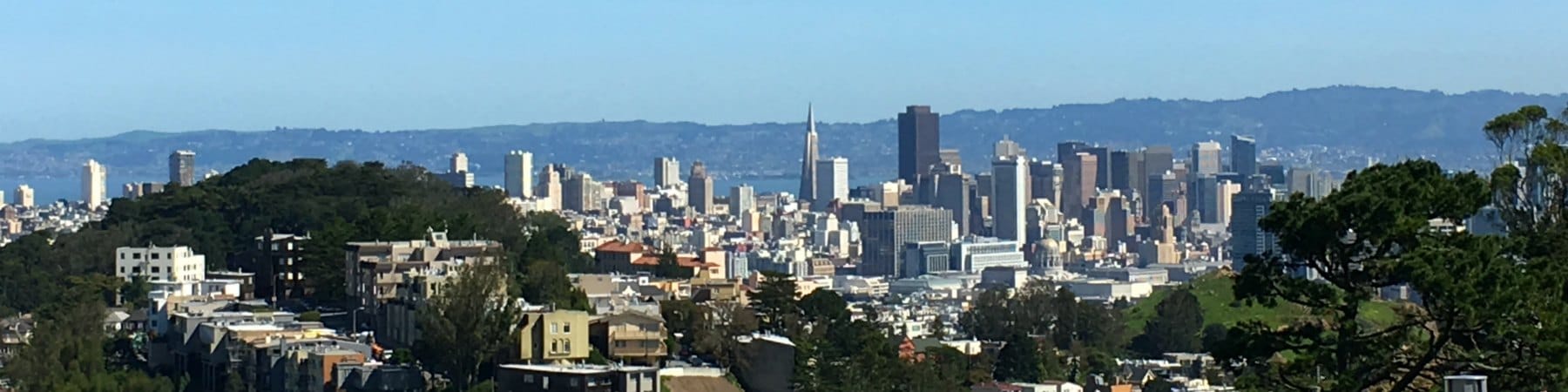
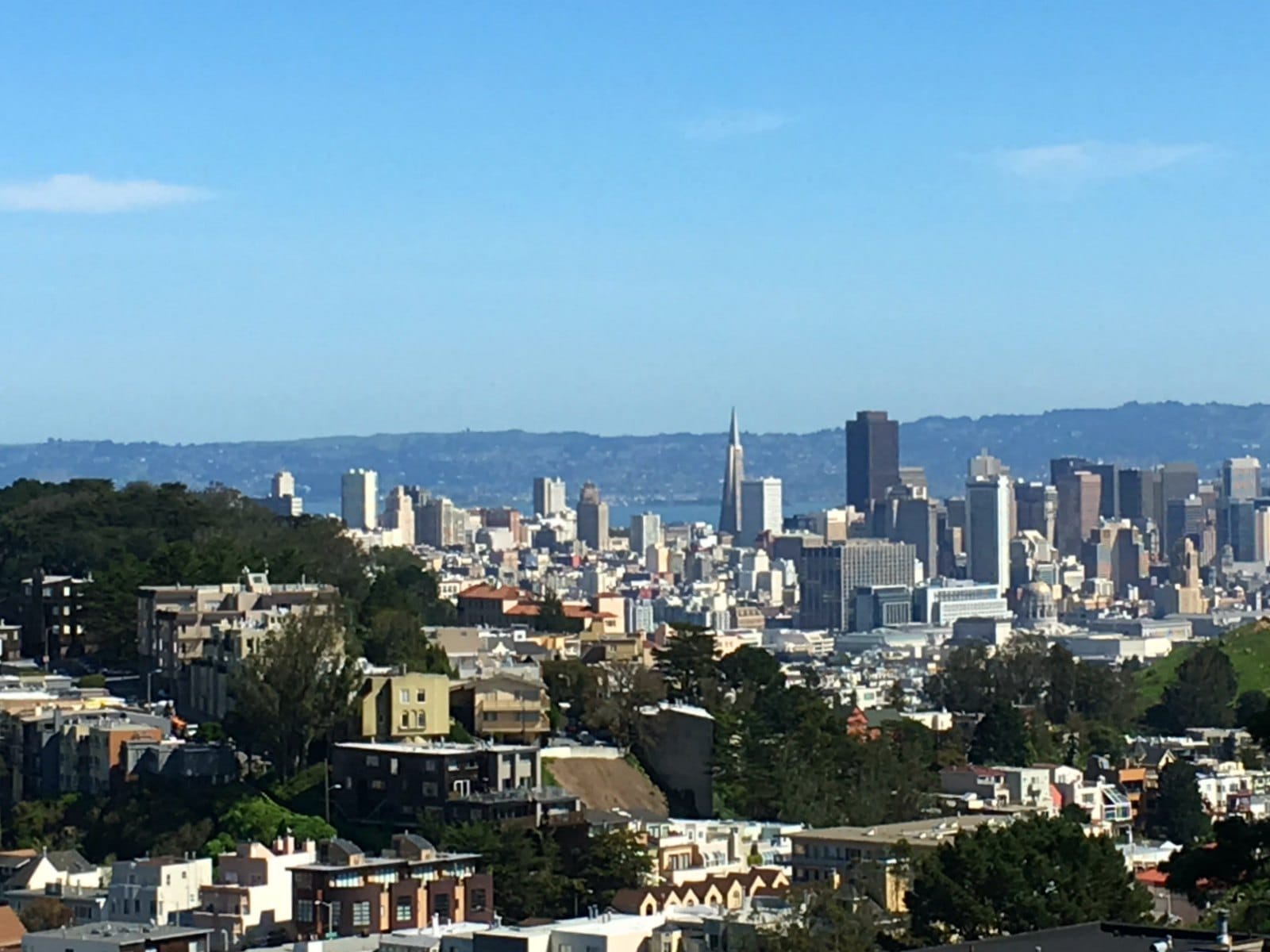
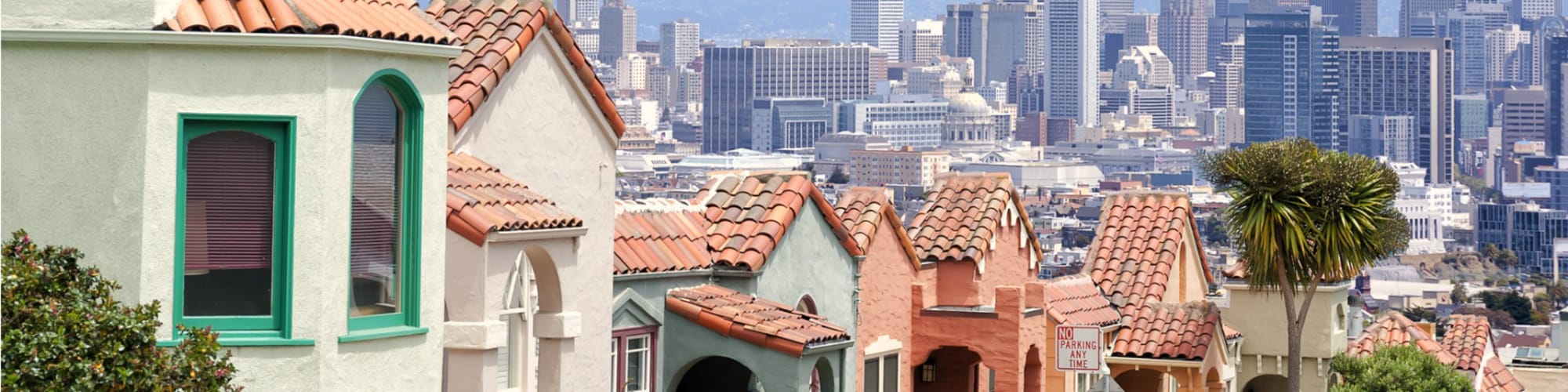
On a clear day the homes here look straight across downtown to the East Bay hills. That view is why people buy here, and why they put up with everything else on this list.
Downtown from the slopes of Twin Peaks.
Built After 1960 and Built for the View
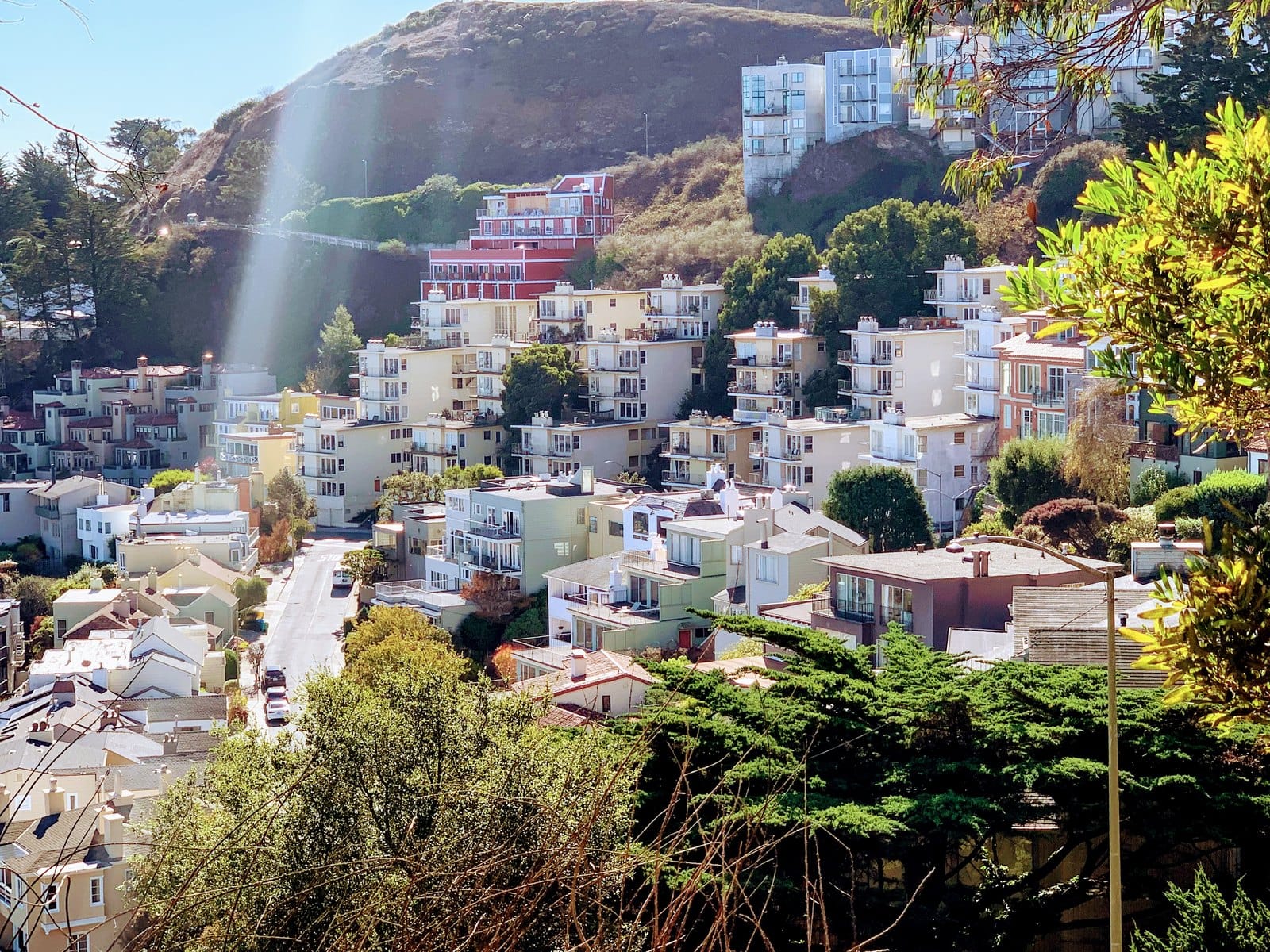
Twin Peaks was empty hilltops until the 1960s. What went up was mostly condos and unit buildings stacked down the slopes, with a smattering of single-family homes. If you want a Victorian, look downhill.
Twin Peaks from Tank Hill.
A Park at the Top of the Street
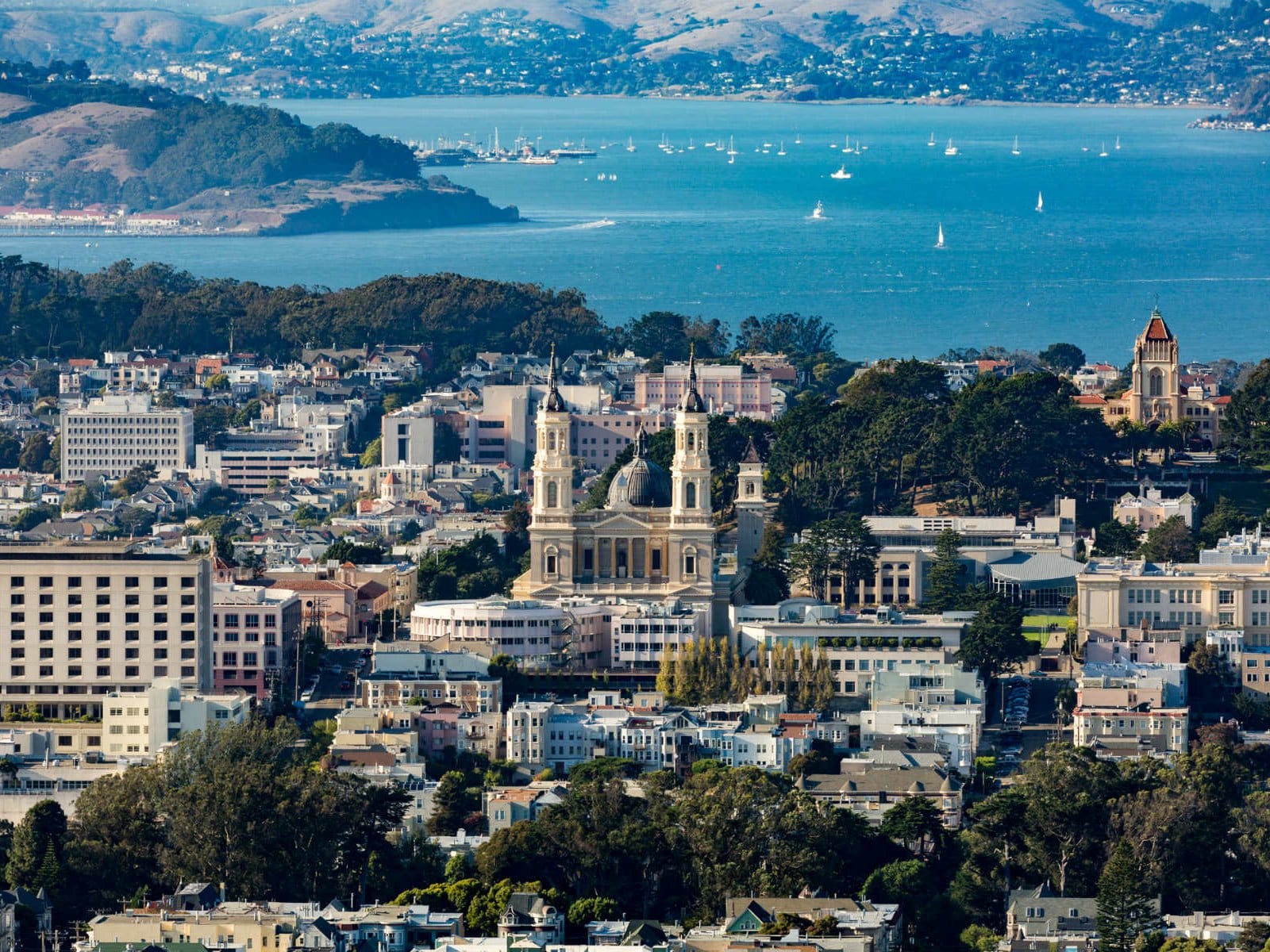
The two summits, Eureka to the north and Noe to the south, are city parkland just over 900 feet up. A stretch of Twin Peaks Boulevard has been closed to cars since 2020 and is being rebuilt as a promenade with trails and overlooks, and every June volunteers lay out the Pink Triangle for Pride, a tradition since 1996.
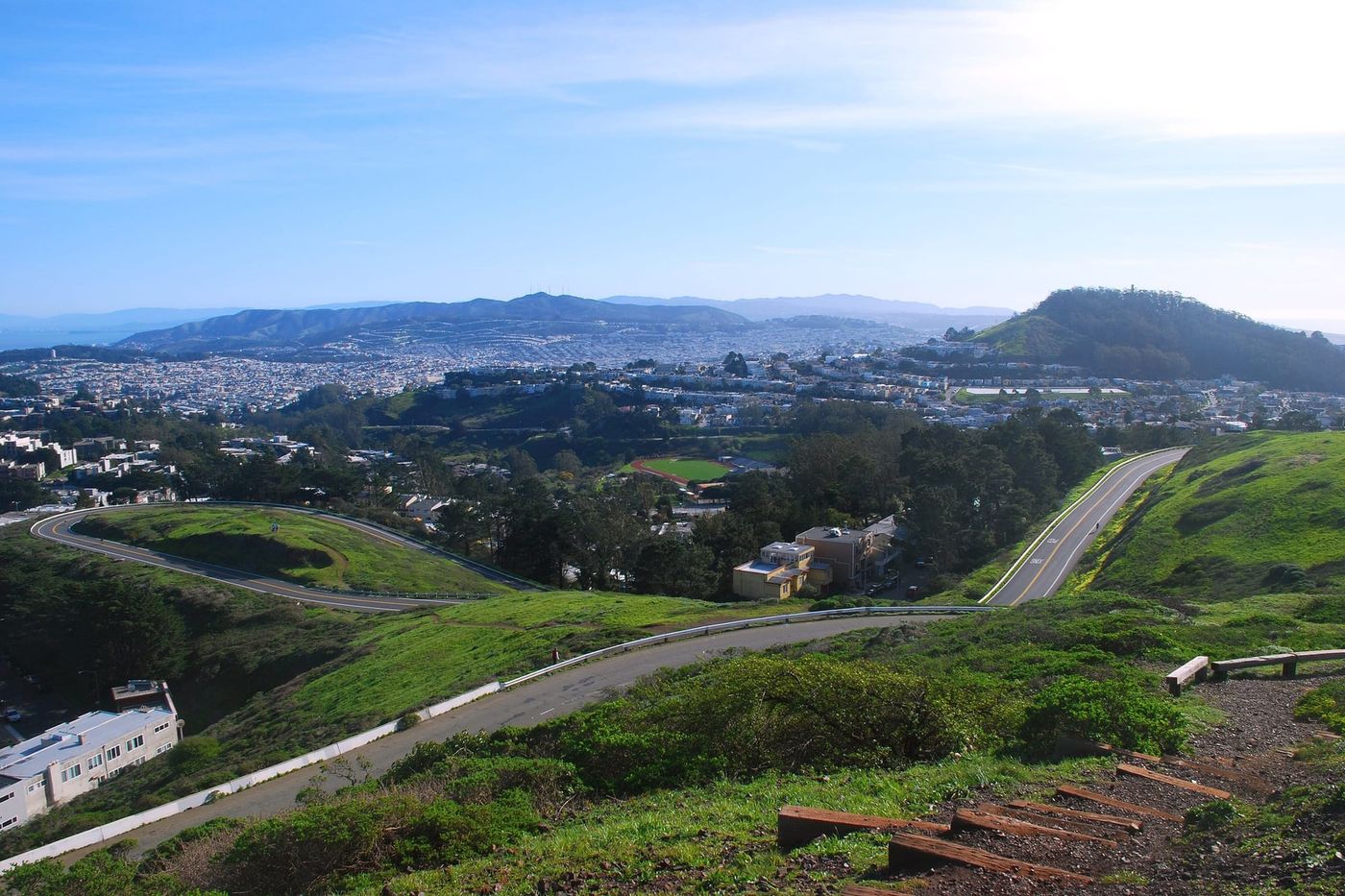
St. Ignatius and the Bay from the summit.
The Longer Story
Twin Peaks Neighborhood Vibe
Twin Peaks, as the name suggests, is the neighborhood immediately below the eastern side of Twin Peaks, with a reputation for cold, windy, and foggy weather. It’s a strictly residential area, with housing constructed starting in the 1960s. On a clear day, Twin Peaks homes are renowned for their amazing views. On a foggy day, though: forget it!
The Homes in Detail
Homes in Twin Peaks tend to be condominiums or unit buildings. There are a smattering of single-family homes in the neighborhood, but they are the exception to the rule. If you’re looking for a Victorian or an Edwardian, you won’t find them here. Twin Peaks was empty hilltops until the 1960s, long after those housing styles were out of production.
Getting Around
Bring your car! If you can’t or don’t want to, the neighborhood is served by Muni bus lines. There is no light rail that serves the neighborhood. Adjacent neighborhoods are just a short walk down the hill, but a long walk back up it.
Where to Shop
Would you like some fog with that coffee? Like many of our post-WWII neighborhoods, Twin Peaks assumes that you have a vehicle. There is no commercial center within the neighborhood, so you’ll be leaving for all of your shopping. The Tower Market strip mall is probably the closest commercial center, and the Diamond Heights shopping center is another option.
Questions We Hear
Is the Neighborhood the Same as the Park at the Top?
No. The two summits are city parkland. The Twin Peaks neighborhood is the residential streets on the slopes below them, mostly on the eastern side.
What Kinds of Homes Are in Twin Peaks?
Mostly condominiums and unit buildings built from the 1960s on, plus some single-family homes. Many are designed around the view, with living rooms and decks facing downtown and the Bay.
Can You Live in Twin Peaks Without a Car?
You can, with effort. Muni buses serve the neighborhood, but there is no light rail and no shopping within it. Castro Station is a walk downhill, and the walk back up is the part people remember.
What Do Homes Sell For in Twin Peaks?
The Recent Sales box at the top of this page shows the last 12 months of medians for houses, condos and TICs, updated monthly. Views move prices here more than almost anywhere, so for a read on a specific home, ask us: we will pull the recent sales and tell you what they mean.