What Homes Sell For
Recent Sales
Median sale prices, last 12 months · Oct 2025 – Oct 2026
- Houses
- $2,100,000
- Condos & co-ops
- $1,068,000
- TICs
- $880,000
Sales in MLS neighborhood 9C (The Mission) reported to the San Francisco MLS, including off-MLS sales; known below-market-rate (BMR) sales excluded. Medians need at least 5 sales. Updated monthly; deemed reliable but not guaranteed. Compare every neighborhood on the price map or ask us what a specific home is worth.
The Good
- The sunniest, warmest weather in San Francisco
- BART at 16th and 24th Streets, plus plenty of Muni
- Flat, walkable streets with restaurants on every corner
- The most condo choice in this guide: 99 sold last year
- Condos and TICs trade below the citywide medians, a real way into the city
The Tradeoffs
- Busy, loud commercial streets
- The feel can change block by block
- New construction here is politically charged
- Single-family houses are rare on the north end
The Mission is the flat, sunny heart of the east side, roughly from Dolores to Potrero and from Duboce down toward Cesar Chavez. Twin Peaks blocks the fog, so lemon and avocado trees grow in backyards here. It has been reinvented more than once, from Spanish mission to Irish and German working-class neighborhood to the center of Latino San Francisco, and every housing cycle starts an argument about it. The Fuller Team has been selling San Francisco homes since 2002, so this guide is the version we give clients: what the houses are really like, what they sell for, and who tends to be happy here.
The Neighborhood Block by Block
Old Theaters, Old Signs
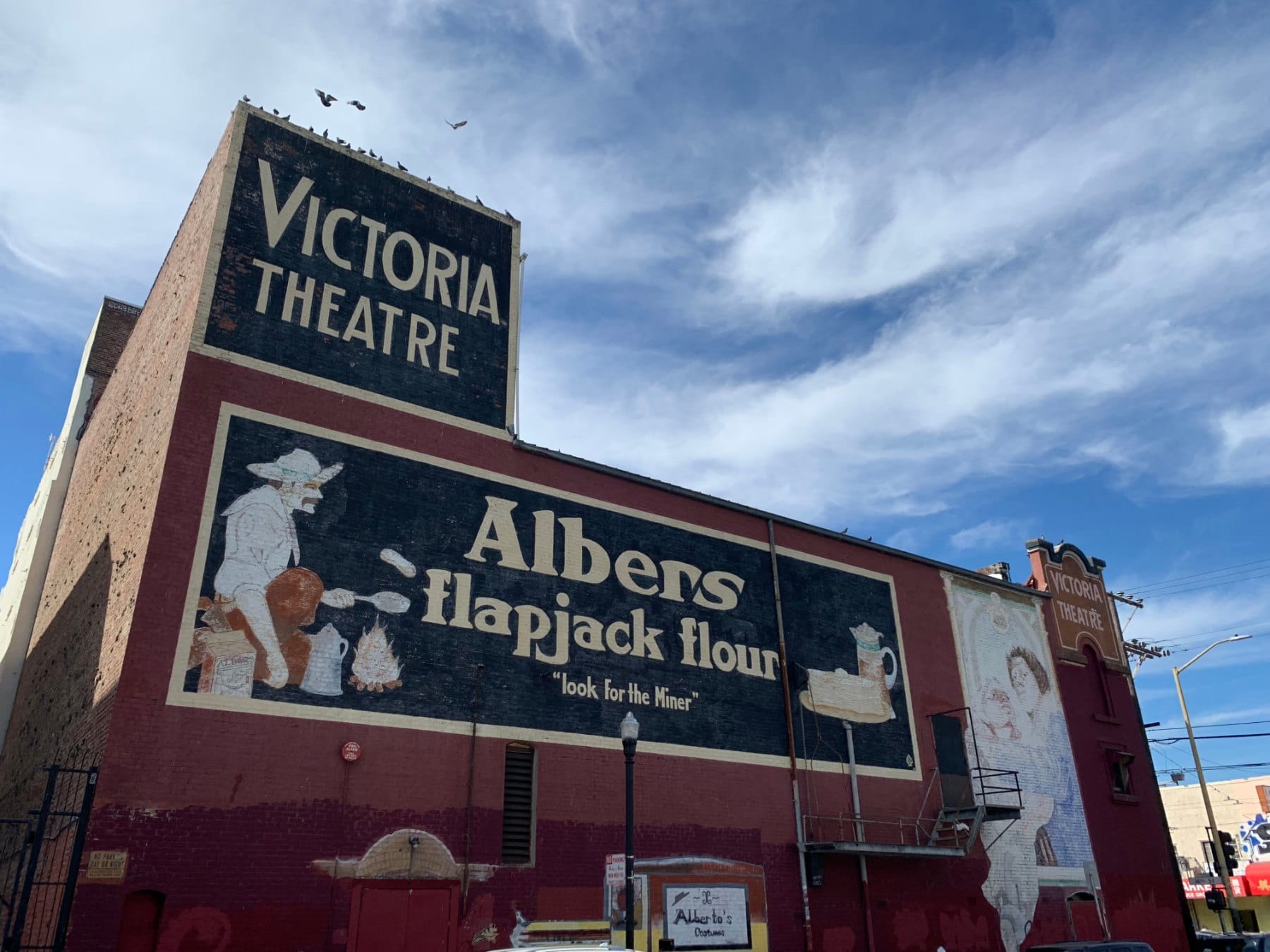
The Victoria Theatre on 16th Street, with the ghost of an Albers Flapjack Flour ad on its wall, still hosts live shows.
The Victoria Theatre on 16th Street. photo: matt fuller
Pocket Parks in Between
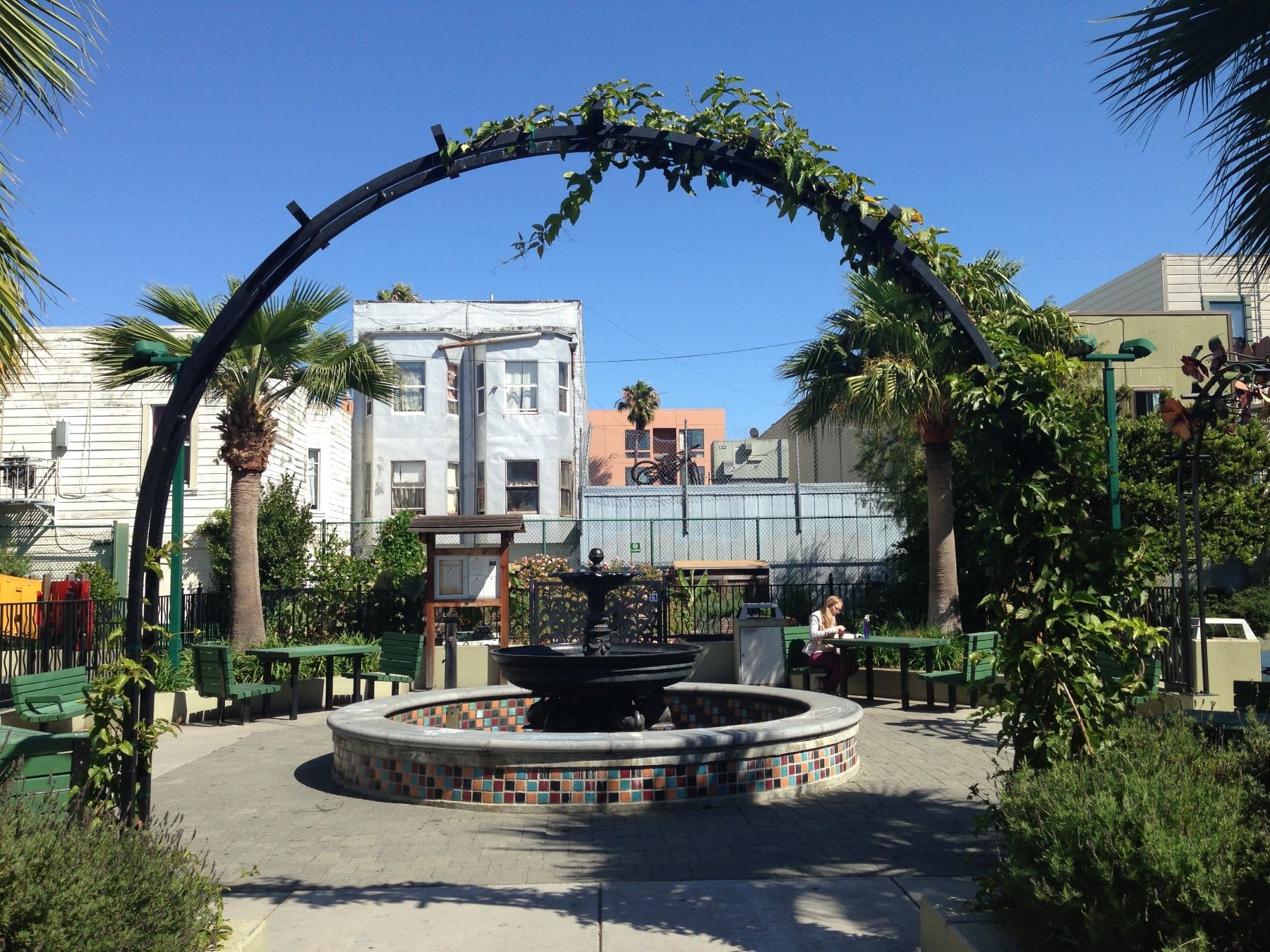
Small parks like Kid Power Park on Hoff Street tuck green space between the apartment buildings.
Kid Power Park on Hoff Street. photo: matt fuller
Victorian Flats, Stacked
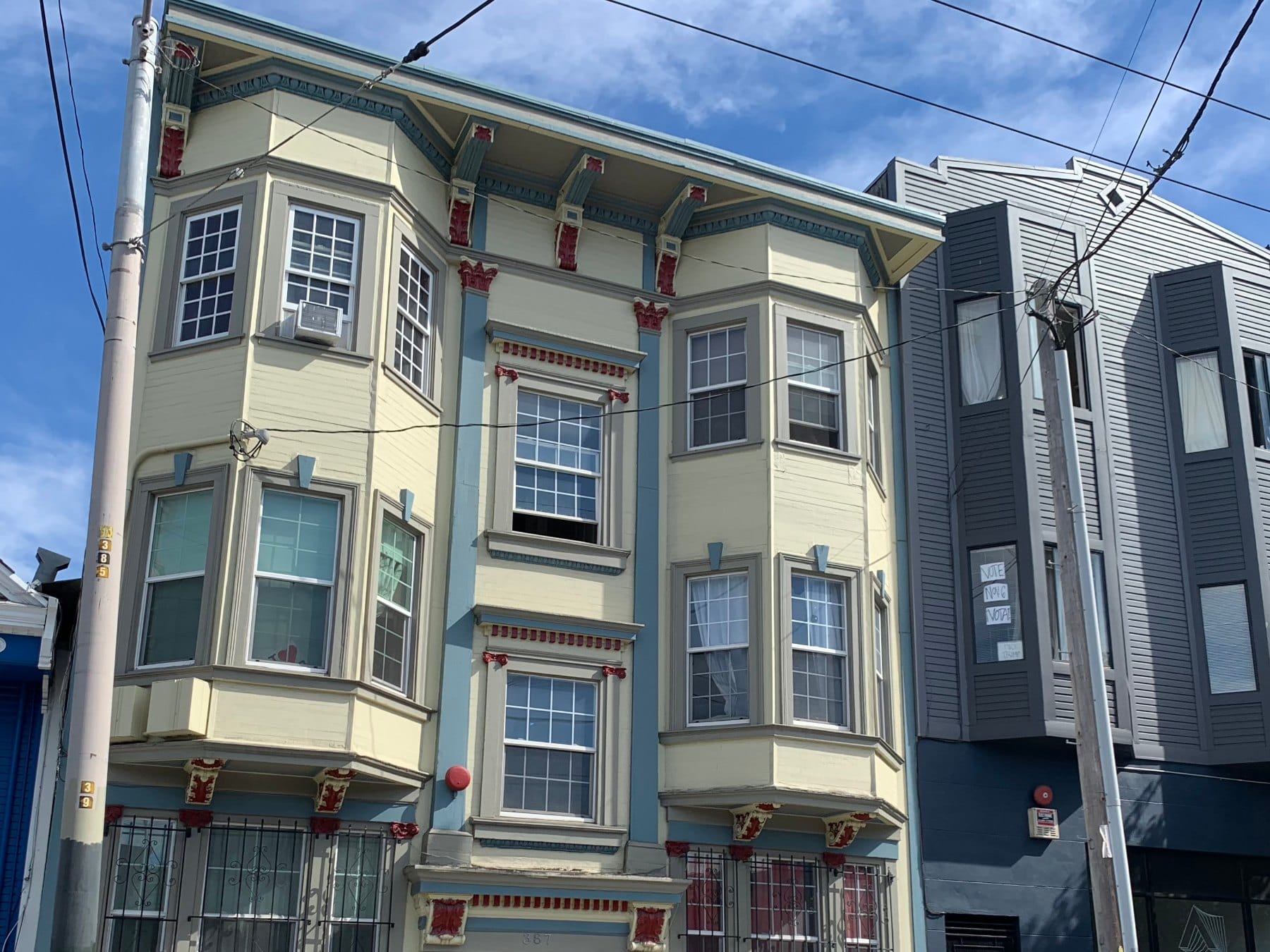
Most of the housing is two- and three-unit Victorian and Edwardian buildings, which is why so much of it trades as condos and TICs.
Bay Windows on Mission District Victorian Flats. photo: matt fuller
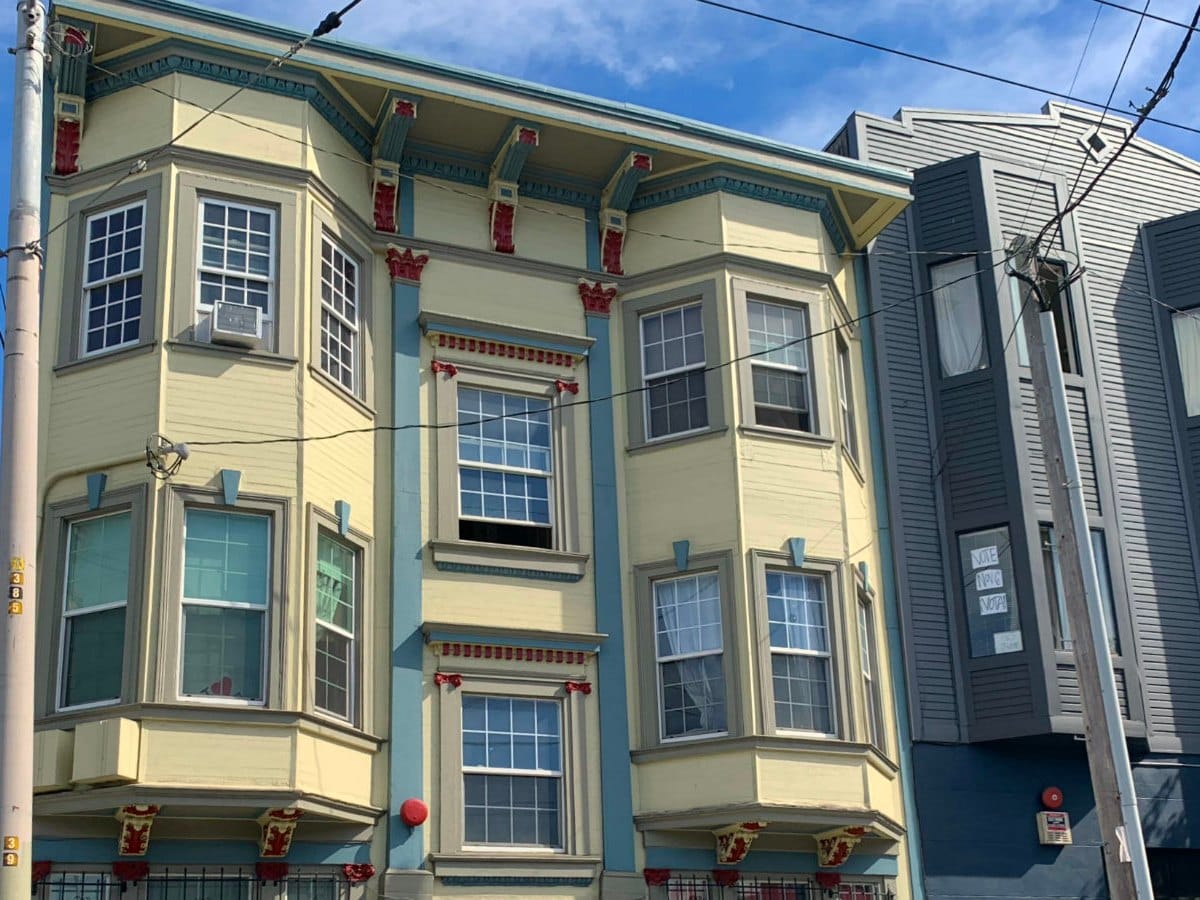
Old Bones, New Paint
Restored Victorians share blocks with newer infill, and the neighborhood can look different from one block to the next.
Restored Victorian Bays in the Mission. photo: matt fuller
The Longer Story
The Homes in Detail
Housing in the Mission is mostly mid-rise, wood-framed multi-family buildings. Single-family homes are rare on the north end and more common on the south end, and there are plenty of condos in smaller and mid-size buildings.
Houses sold for a median of about $1,110 a square foot last year, condos about $990. With 99 condo sales and 27 TIC sales, this is where many first-time buyers find a way in.
Weather
The Mission has a reputation for the sunniest weather in San Francisco. Twin Peaks shelters it from the fog, which is why citrus and avocado trees thrive in backyards.
Eating Out
Mission, Valencia and South Van Ness are mixed-use, with homes above shops and restaurants. You could eat out for weeks before repeating a cuisine.
Getting Around
BART runs under the neighborhood with stations at 16th and 24th Streets, which makes downtown and East Bay commutes easy. Numerous Muni bus lines cross it as well.
Questions We Hear
Are There Any Notable Historical Landmarks or Sites in the Inner Mission?
As one of the oldest, if not the oldest, areas of San Francisco, the Inner Mission (often called just “the Mission”) has been home to native people, Spanish missionaries, Irish, German, Mexican and Central American immigrants, and more recent gentrifiers throughout its long history. Several areas of the Mission reflect this history through beautifully rich mural projects, including those along Balmy and Clarion Alleys, the Women’s Building, and at the Mission Cultural Center for Latino Arts.
Other designated landmarks include the city’s oldest single-screen movie theater in the Streamline Moderne style, Grand Theater, and the San Francisco Armory, built as an arsenal for the National Guard in 1912-14 and in the Moorish Revival style. Throughout its history, the Armory has also played host to sporting events, a movie set for Star Wars, a rehearsal space for the San Francisco Opera, and a production studio for Kink.com.
What Is There to Do in the Inner Mission?
Where do we even start? The Inner Mission is arguably the city’s most lively, vibrant, diverse, and chaotic neighborhood–a fascinating collision of histories, cultures, classes, and communities. One block of Mission Street can feature a Chinese donut shop, a Mexican taqueria, a movie theater, a check cashing joint, a storefront Pentecostal church, and sidewalk vendors. One block over, Valencia Street is a hip shopping and dining corridor with all kinds of international and fusion cuisines, art galleries, coffee shops, and both first- and second-hand furniture stores. The Inner Mission offers plenty of street festivals and parades throughout the year, including for Carnaval, the largest multicultural festival in the West Coast, bringing together San Francisco's Latino, Caribbean and African Diasporic
How Does the Community Vibe in the Inner Mission Contribute to its Real Estate Appeal?
The Inner Mission has more of a “communities” vibe than many San Francisco neighborhoods, and a new condo development on Valencia Street will feel very different from a single-family Victorian-style home on, say, Alabama and 24th Streets. Quiet and sedate, it’s not. People move to the Inner Mission to be near the pulsing heart of urban San Francisco, within walking distance of every conceivable cultural attraction, restaurant, and public transit option, while enjoying some of the city’s sunniest weather (and flattest streets).
Where Can I Find New Construction in the Inner Mission?
As an “already built” neighborhood, the Inner Mission is not a neighborhood where you should expect to find substantial new construction projects. Smaller developers may renovate/flip existing properties, or may take advantage of recent housing laws to add additional units to already existing housing. Transit corridors and major neighborhood streets are the most likely areas for new construction buildings in already built neighborhoods with existing housing stock.
What Are the Average Home Prices in The Mission?
Prices in The Mission move block by block and season by season, so a single average hides more than it tells. Our Market Notes track current values across the city. For a read on a specific home or street, ask us: we’ll pull the recent sales and tell you what they mean.