What Homes Sell For
Recent Sales
Median sale prices, last 12 months · Oct 2025 – Oct 2026
- Houses
- $3,750,000
- Condos & co-ops
- $1,565,000
- TICs
- $1,050,000
Sales in MLS neighborhood 5K (Eureka Valley/Dolores Heights) reported to the San Francisco MLS, including off-MLS sales; known below-market-rate (BMR) sales excluded. Medians need at least 5 sales. Updated monthly; deemed reliable but not guaranteed. Compare every neighborhood on the price map or ask us what a specific home is worth.
The Good
- Central and sunny by San Francisco standards, east of Twin Peaks and out of the worst of the fog
- Two Muni Metro stations and the F-line streetcars make it easy to live without a car, with quick drives to 101 and 280 when you want one
- Castro Street restaurants, bars and shops, with Dolores Park and Duboce Park a walk away
- A real mix of homes: Victorian and Edwardian houses, condos and TICs
- Values hold up: houses sell about 88% over the citywide median, condos about 23% over
The Tradeoffs
- The blocks toward Twin Peaks and Dolores Heights are steep
- Fair weekends, Pride and Friday nights bring crowds near Castro and Market
- Afternoon winds pick up in spring and summer
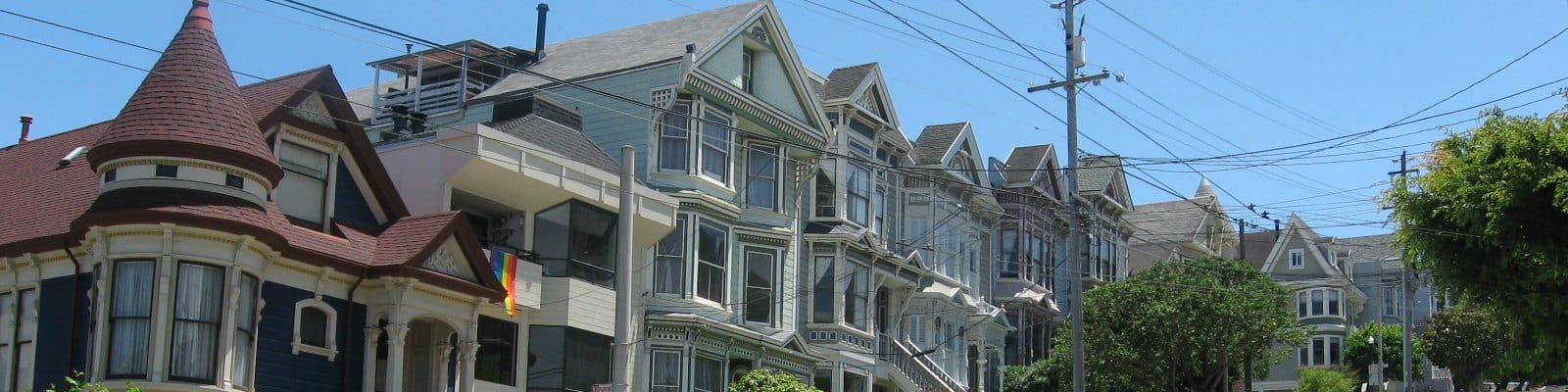
The Castro, San Francisco’s historically gay neighborhood, runs from the slopes of Twin Peaks east toward Mission Dolores, with Corona Heights and Duboce Triangle to the north and Noe Valley to the south. It was a working-class Irish neighborhood of Victorians and Edwardians before gay men moved in during the 1970s and made it the center of the gay rights movement, with Harvey Milk out front. On the San Francisco MLS map it is neighborhood 5K, Eureka Valley/Dolores Heights, which also takes in the view homes above Dolores Park. We have been selling here since the crosswalks at Castro and 18th were plain white, and this guide is the version we give clients: what the homes are like, what they actually sell for, and why so many people who come for a weekend end up buying a Victorian up the hill.
The Neighborhood Block by Block
Is It The Castro or Eureka Valley?
Both. The MLS calls it Eureka Valley because it sits below Eureka, the north peak of Twin Peaks. The south peak is Noe, and Noe Valley sits below that one. Buyers sometimes see “Eureka Valley” on a listing and assume someone is avoiding the word Castro. Nobody is. It’s geography, and we’ve been explaining it since one of our first blog posts, back around 2006.
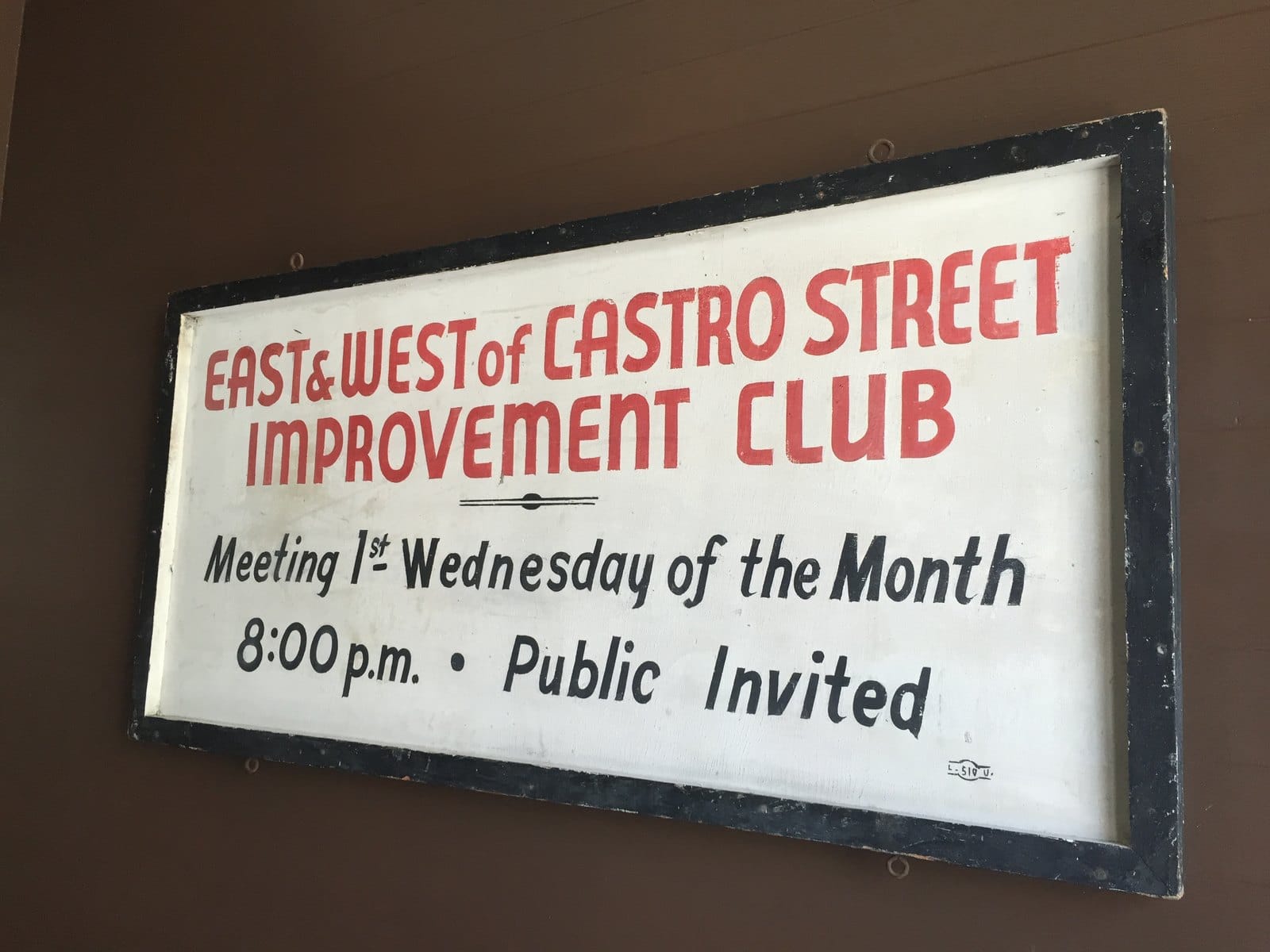
A vintage sign for the East and West of Castro Street Improvement Club.
The Theatre Is Back
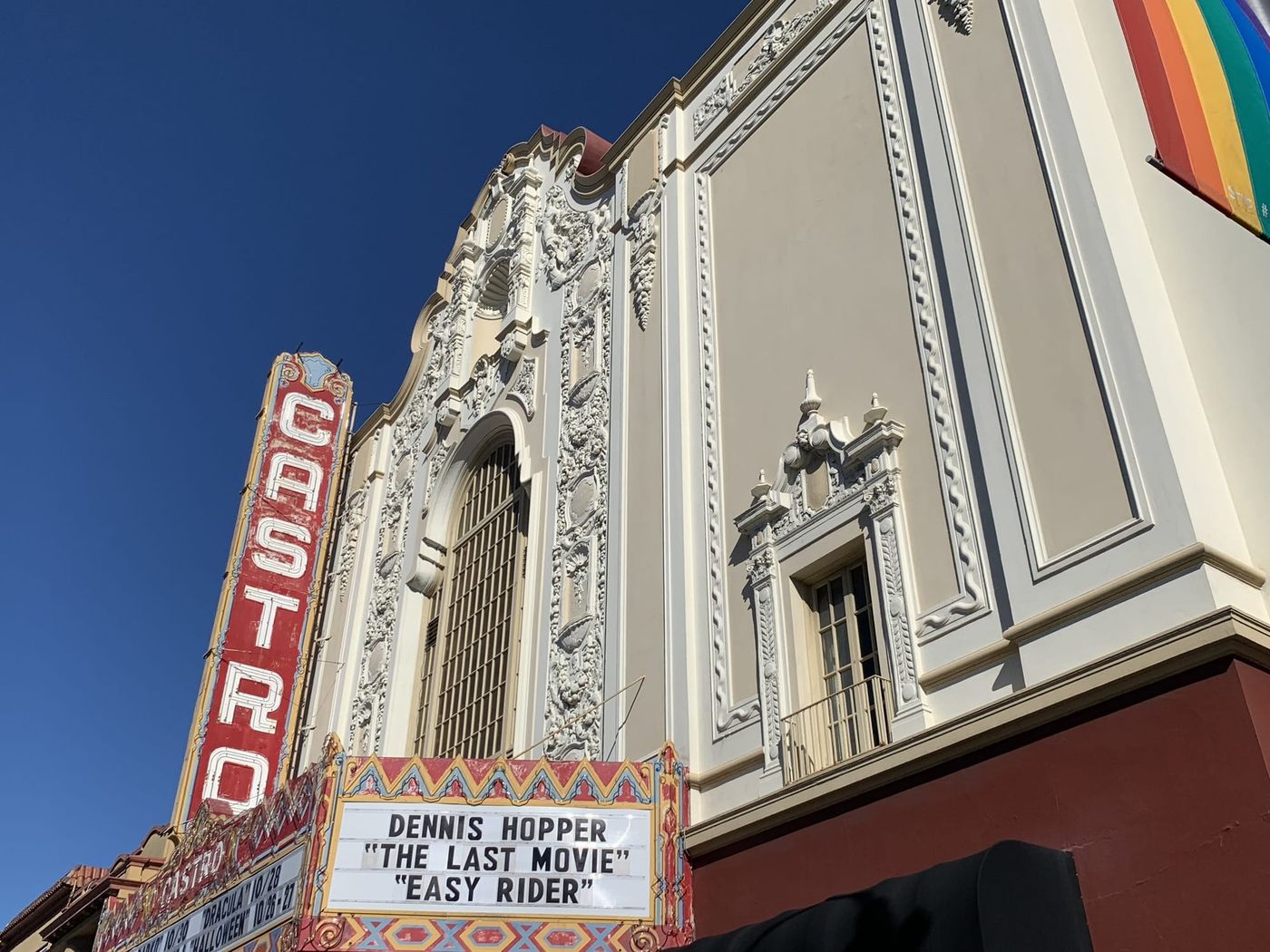
The Castro Theatre opened in 1922, designed by Timothy Pflueger, and has anchored Castro Street ever since. Another Planet Entertainment took it over in 2022, renovated it, and reopened it in February 2026 after a top-to-bottom renovation.
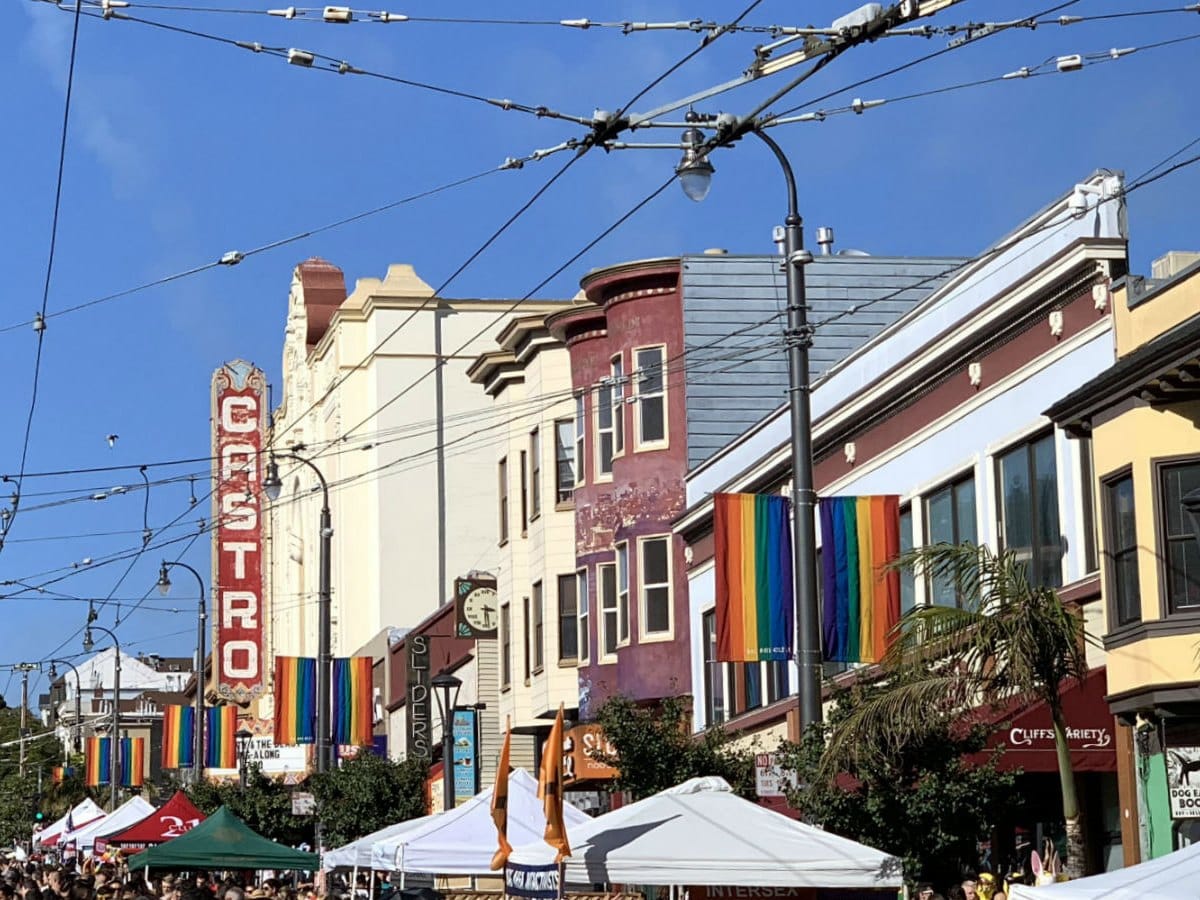
The Castro Theatre sign above Castro Street on fair day.
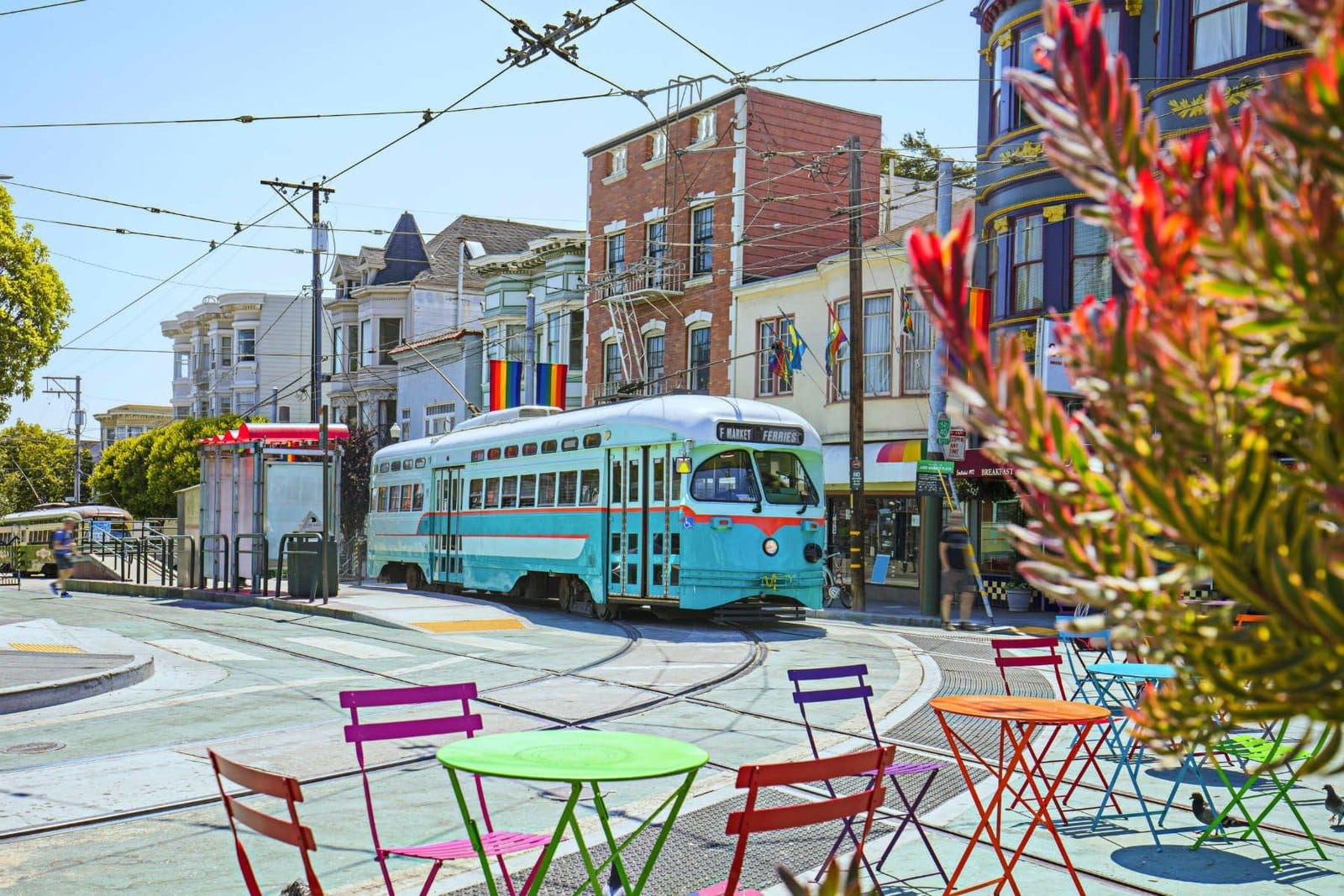
Easy to Live Without a Car
Castro Station puts Muni Metro right under Market Street, the historic F-line streetcars run from the Castro down to the waterfront, and several bus lines cross the neighborhood. Most of daily life is a walk or a train ride, and most homes still come with parking for the weekend drive out of town.
An F-line streetcar at the Castro end of Market Street.
History Is Made Here
Harvey Milk ran his camera shop and his campaigns from 575 Castro, and he started the Castro Street Fair in 1974. It still takes over Market and Castro the first weekend in October. Twin Peaks Tavern, at Castro and Market, is city Landmark No. 264 and is known as the first gay bar with full-length open windows.
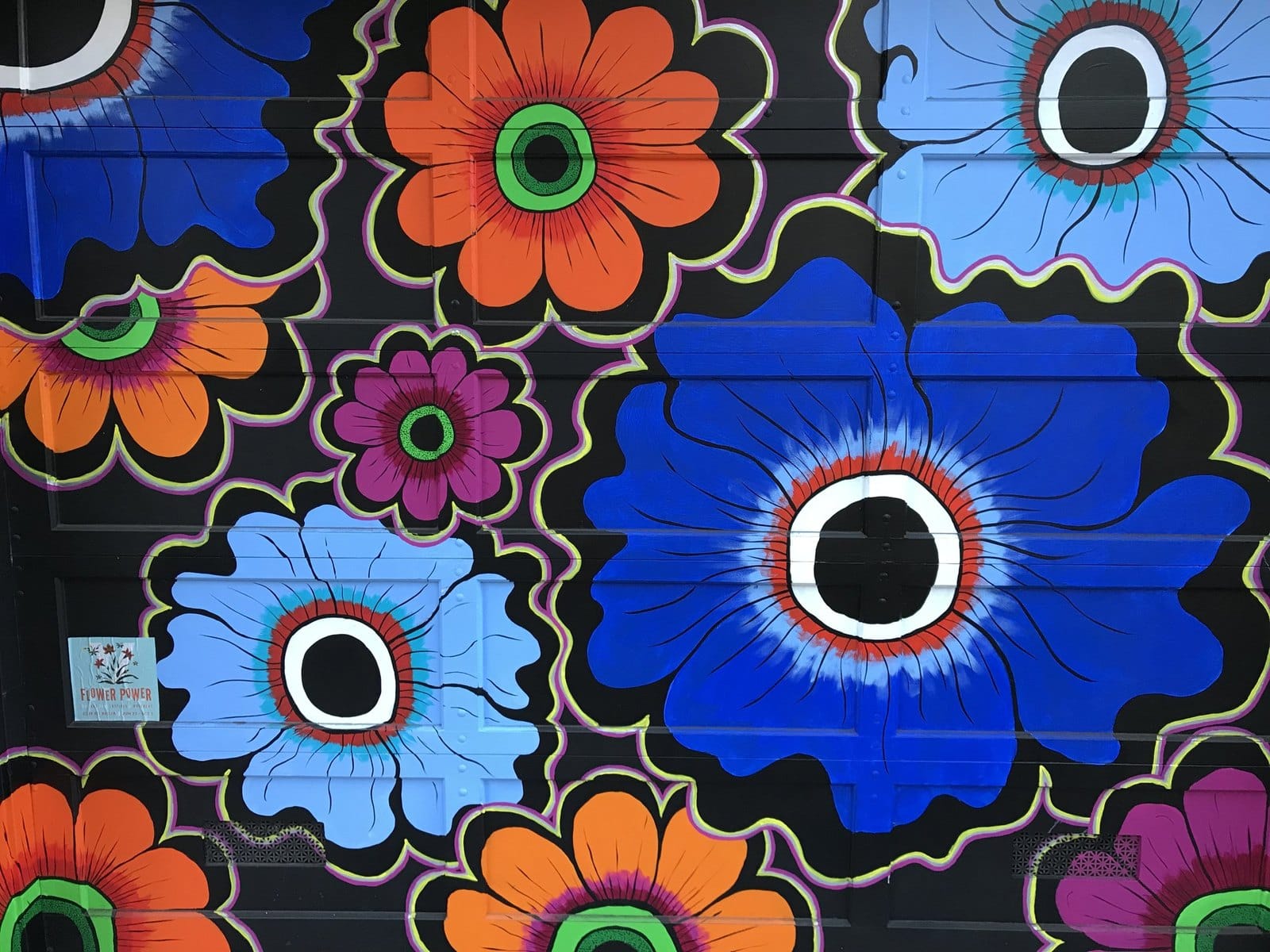
A flower mural on a Castro wall.
The Longer Story
From Irish Working Class to Gay Rights Capital
Once a predominantly working-class Irish neighborhood, the Castro was transformed by gay men in the 1970s. It was the epicenter of the gay rights revolution that began in the 1970s, led by pioneers such as Harvey Milk (a neighborhood school carries his name today).
Today, the thriving commercial center of the neighborhood, radiating out a few blocks from Castro and 18th Street, is full of restaurants, shopping, bars, and other entertainment.
The Homes in Detail
The Castro offers a diverse mix of homes, with a blend of styles and property types from large single-family Victorians and Edwardians to modern condos and tenancies-in-common (TICs). The great weather and open-minded neighbors make the Castro a destination neighborhood, regardless of your sexuality.
There is also a small percentage of unit buildings and small apartment buildings, most of which are clustered along the commercial corridors.
Getting Around
In addition to several bus lines, the area is served by two Muni subway stations, as well as the street-level F-line with its collection of historic streetcars. It is an easy neighborhood in which to live car-free, with pretty much everything you need right there in the neighborhood or a Muni ride away.
Questions We Hear
Are There Any Notable Historical Landmarks in the Castro?
The Castro Theatre, a 1922 movie palace by Timothy Pflueger, reopened in 2026 after a full renovation. Twin Peaks Tavern at 401 Castro is San Francisco Landmark No. 264 and is known as the first gay bar with full-length open windows. Harvey Milk, the first openly gay man elected to public office in California, ran Castro Camera at 575 Castro. The F-line’s historic streetcars stop at the foot of the neighborhood, and the city has a redesign of Harvey Milk Plaza, above Castro Station, planned to finish in 2028.
What Is There to Do in the Castro?
Where do we begin? Thai, Greek, and seafood restaurants. Coffee shops. Busy bars and nightclubs. Grocery stores. Sunbathing in Dolores Park. Great people watching. Street fairs and streetcars. Leg-burning hikes on very steep hills, or flatter strolls to Duboce Park.
How Does the Community Vibe Affect Castro Real Estate?
Although it is still the center of the city’s LGBTQ community, the Castro is an increasingly diverse and lively neighborhood with well-kept single-family homes, apartment buildings, and newer condos. Well served by both streetcars (above Market Street) and Muni trains (below Market Street), the Castro is a prime location for downtown workers, and a short drive to 280 and 101 for Silicon Valley commuters.
Where Can I Find New Construction in the Castro?
As an already built neighborhood, the Castro is not a place to expect substantial new construction. Smaller developers may renovate existing single-family homes, or use recent housing laws to add units to existing buildings. Transit corridors and the main commercial streets are the most likely spots for new buildings.
What Do Homes Sell For in the Castro?
The Recent Sales box at the top of this page shows the last 12 months of medians for houses, condos and TICs, updated monthly. Prices move block by block, so for a read on a specific home or street, ask us: we will pull the recent sales and tell you what they mean.