What Homes Sell For
Recent Sales
Median sale prices, last 12 months · Oct 2025 – Oct 2026
- Houses
- $4,120,000
Sales in MLS neighborhood 4G (St. Francis Wood) reported to the San Francisco MLS, including off-MLS sales; known below-market-rate (BMR) sales excluded. Medians need at least 5 sales. Updated monthly; deemed reliable but not guaranteed. Compare every neighborhood on the price map or ask us what a specific home is worth.
The Good
- Designed as a whole: Olmsted Brothers landscaping, fountains, lawns and curving streets, most of it intact.
- Large single-family homes on big lots, many by architects with famous names.
- Private parks and tennis courts maintained by the homes association.
- Quiet streets with West Portal’s shops and the Muni Metro a short walk away.
- Prices sit far above the city median, which is good news for owners.
The Tradeoffs
- Homes association rules and design review shape what you can change.
- Almost no shops inside the neighborhood; errands mean West Portal or Stonestown.
- The west side gets its share of fog.
- Inventory is thin, so the right house can take patience.
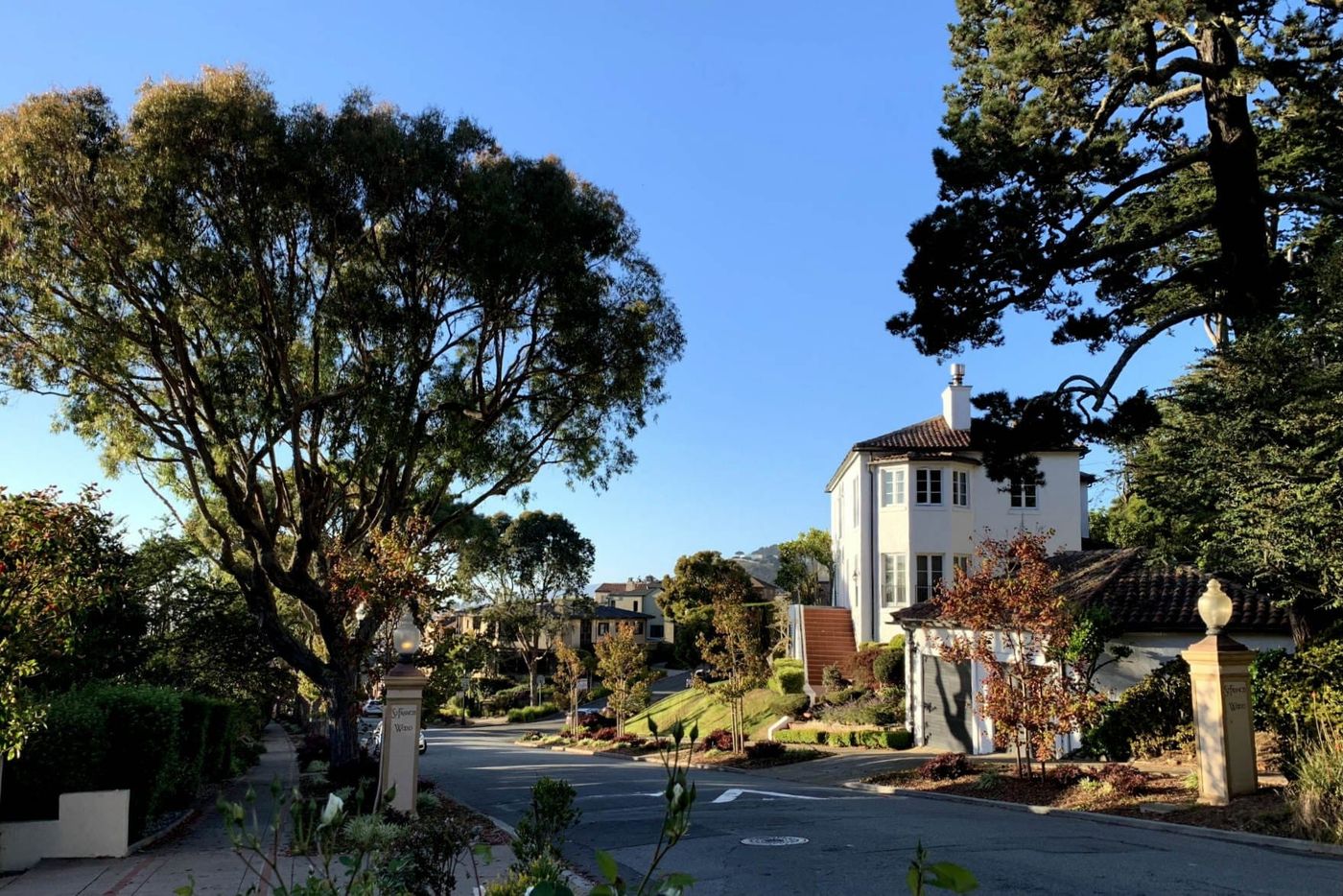
St. Francis Wood is the west side’s grand residence park. The Mason-McDuffie Company bought the land in 1912, brought in the Olmsted Brothers for the landscape, and built a neighborhood of large homes behind formal gates. It is listed on the National Register of Historic Places, and it still looks the way it was drawn.
The Neighborhood Block by Block
You Know When You Have Arrived
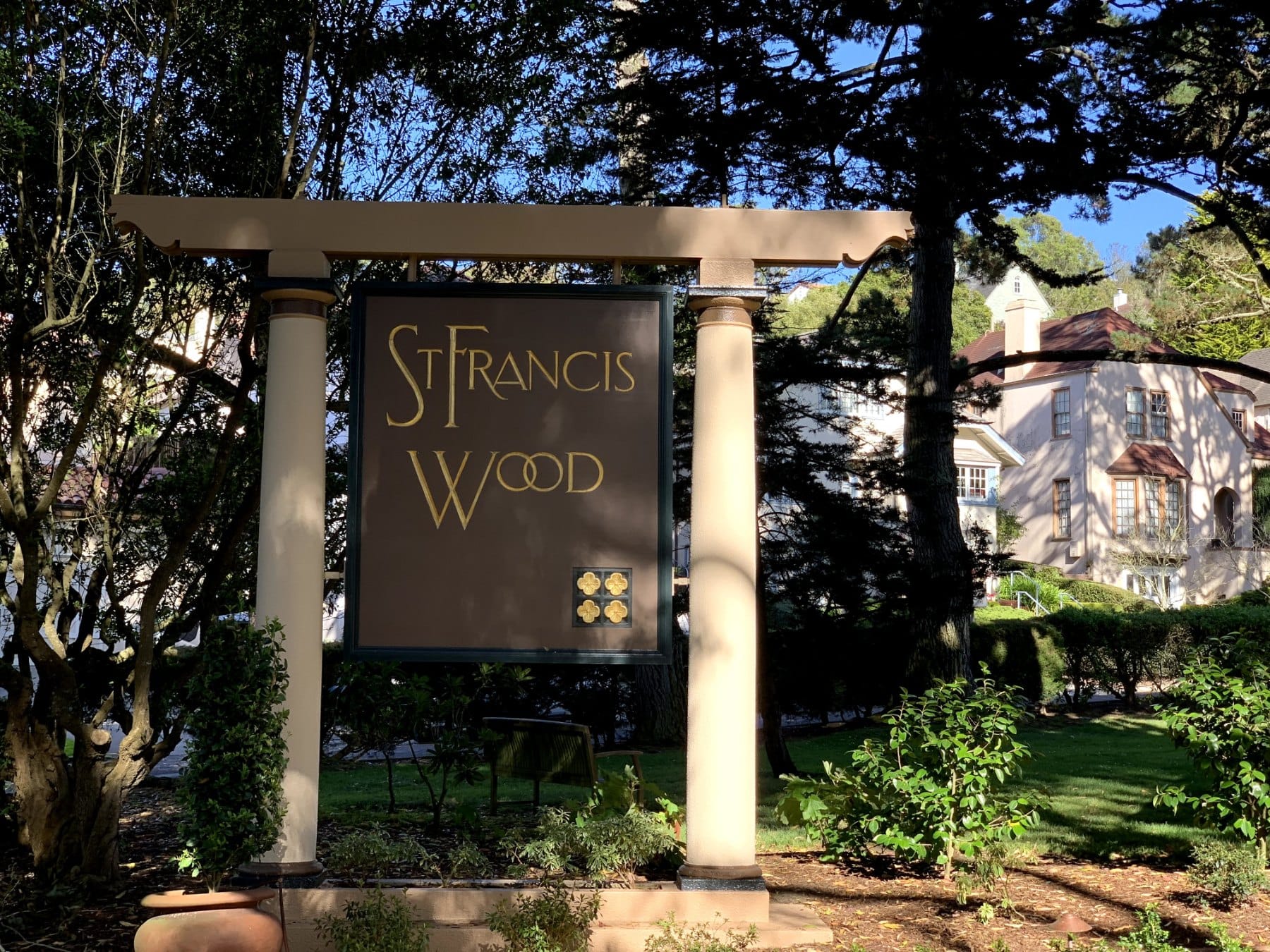
The neighborhood announces itself with signs, gates and fountains. The plan was to feel like a park you happen to live in, and it still does.
The St. Francis Wood Sign. photo: matt fuller
Fountains and Formal Lawns
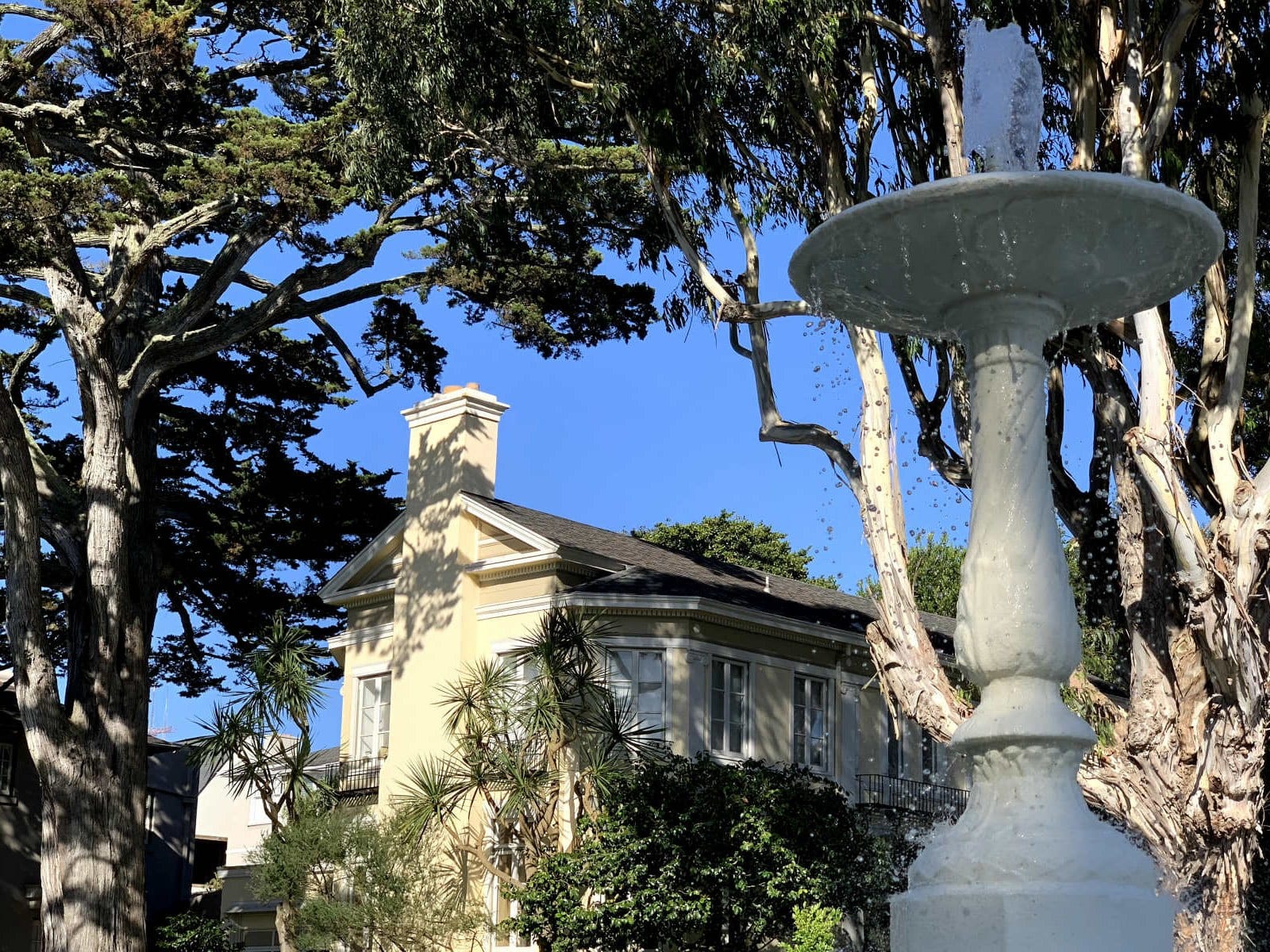
Fountains, balustrades and landscaped medians run through the plan; John Galen Howard designed the entrance gates and the fountain at the circle. The homes association maintains the shared grounds, which is why they look this good a century later.
A Fountain on a St. Francis Wood Street. photo: matt fuller
Big Houses, Big Lots
Mediterranean, Tudor, Colonial and revival houses on generous lots, with deep setbacks and real gardens. Henry Gutterson and the firm Masten & Hurd designed nearly a third of them.
A Home and Garden in St. Francis Wood. photo: matt fuller
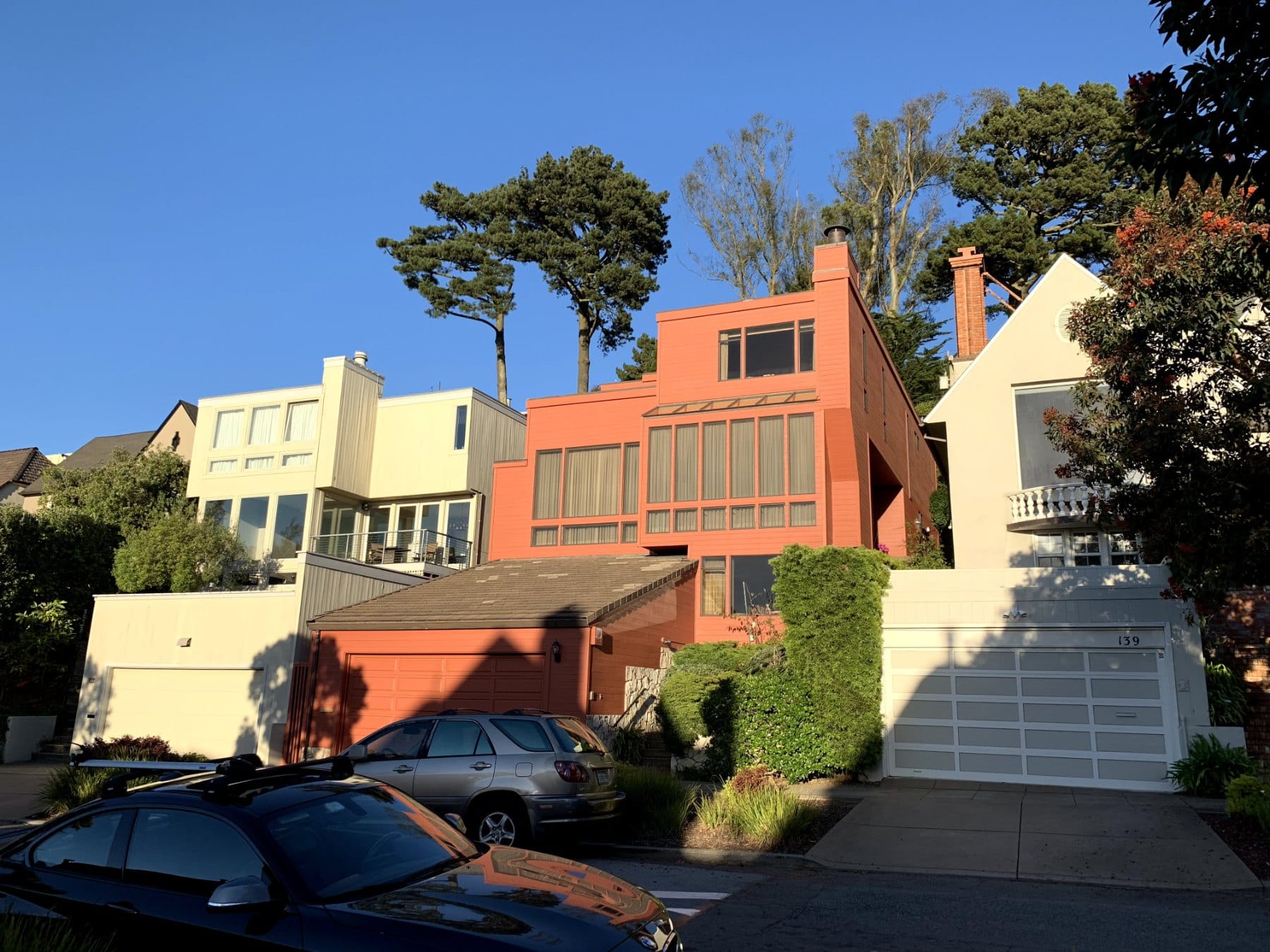
Room for a Modern House
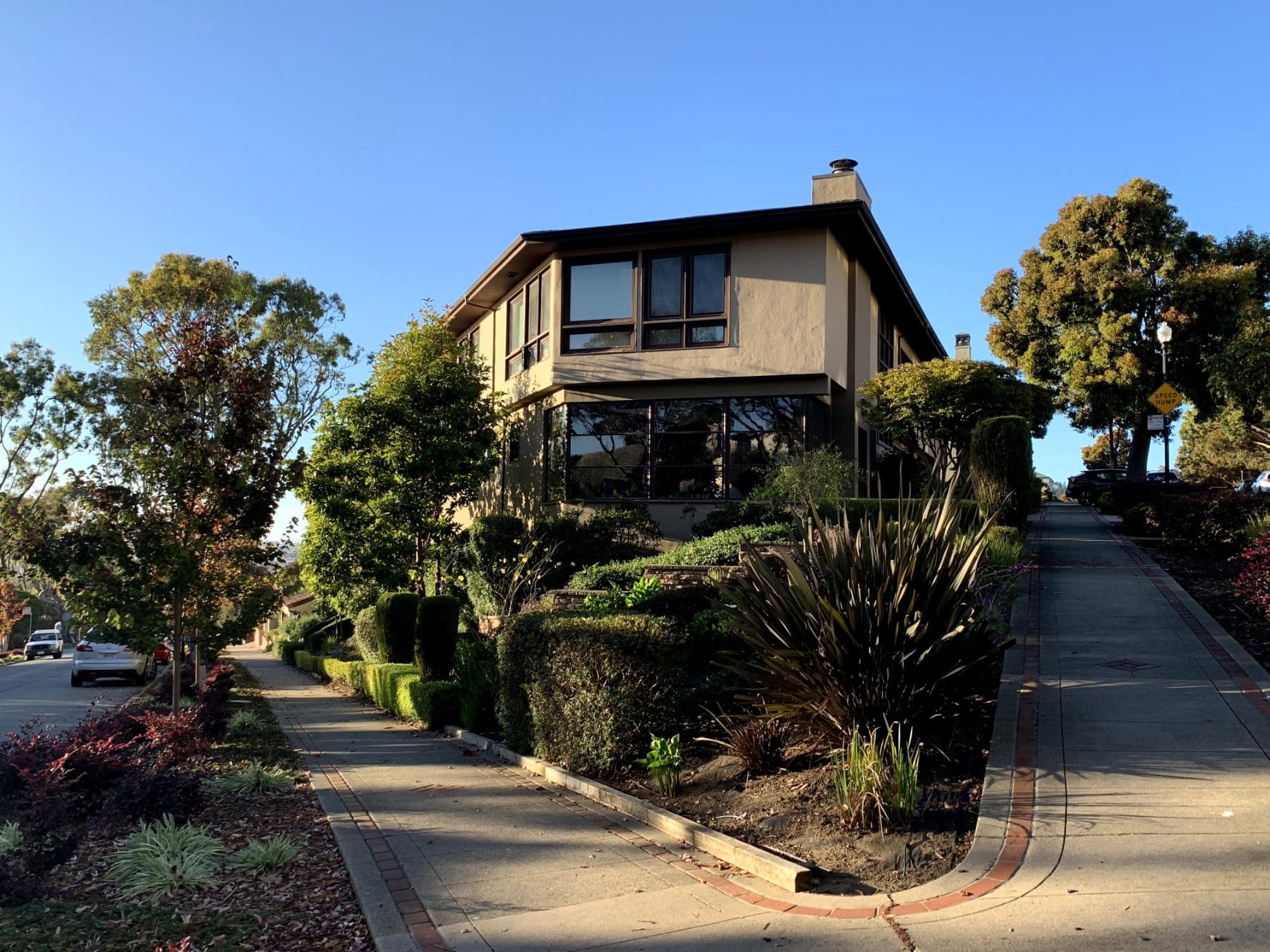
Not everything here is a period piece. A handful of midcentury and modern houses sit comfortably among the revival homes.
A Modern House Among the Revival Homes. photo: matt fuller
The Longer Story
The Plan
In 1912 the Mason-McDuffie Company bought the land for St. Francis Wood, and the Olmsted Brothers designed its landscape. Much of the neighborhood remains true to that plan. It is listed on the National Register of Historic Places as the St. Francis Wood Historic District.
The Homes in Detail
Large single-family homes in revival styles. Henry Gutterson (about 75 houses) and Masten & Hurd (about 77) designed nearly a third of the neighborhood, and Julia Morgan is among the other architects represented. The homes association owns and maintains shared parks and green spaces for residents.
Getting Around
West Portal Avenue and its Muni Metro station are close by, and 19th Avenue and I-280 are a quick drive for Peninsula commuters.
Questions We Hear
Are There Any Notable Historical Landmarks or Sites in St. Francis Wood?
In 1912, the Mason-McDuffie Company purchased 175 acres of land to create St. Francis Wood. Duncan McDuffie, responsible for numerous developments around the Bay Area, hired the Olmsted Brothers to design the landscape of the community one year later. Today, much of the neighborhood remains unchanged from Olmsted’s original design. Henry Gutterson and Masten & Hurd designed nearly a third of the houses, and Julia Morgan is among the other architects represented.
What Is There to Do in St. Francis Wood?
St. Francis Wood is home to multiple lush parks and green spaces. The St. Francis Homes
Association owns and maintains these spaces for the private use of residents and their guests. As one example, Terrace Green Park was designed by the Olmsted Brothers to provide a recreation area for residents and included lawn areas, tennis courts, and a clubhouse. Its original sidewalk system divided the park into a series of three level lawn areas separated by graded slopes. These sidewalks were later removed, and the park now features a long lawn with trees and greenery. a basketball court, a children’s play area, and two tennis courts.
How Does the Community Vibe in St Francis Wood Contribute to its Real Estate Appeal?
Developed as a residence park in the 1920s, St. Francis Wood is often called the “Pacific Heights of the West of Twin Peaks neighborhoods.” Until recent zoning changes, the neighborhood was entirely single-family in nature with no multi-unit or commercial/retail real estate within its bounds. Large homes on big lots with easy access to freeways are all part of this neighborhood’s appeal.
Where Can I Find New Construction in St. Francis Wood?
Like many San Francisco neighborhoods, St. Francis Wood is essentially fully developed and complete, save for the occasional re-development of existing structures. You can consult with planning and building department resources to check open and pending neighborhood permits and proposed developments (or just let your friendly Fuller Team agent do it for you).
What Are the Average Home Prices in St. Francis Wood?
Prices in St. Francis Wood move block by block and season by season, so a single average hides more than it tells. Our Market Notes track current values across the city. For a read on a specific home or street, ask us: we’ll pull the recent sales and tell you what they mean.