What Homes Sell For
Recent Sales
Median sale prices, last 12 months · Oct 2025 – Oct 2026
- Houses
- $5,250,000
- Condos & co-ops
- $1,975,000
- TICs
- $1,525,000
Sales in MLS neighborhood 7A (the Marina) reported to the San Francisco MLS, including off-MLS sales; known below-market-rate (BMR) sales excluded. Medians need at least 5 sales. Updated monthly; deemed reliable but not guaranteed. Compare every neighborhood on the price map or ask us what a specific home is worth.
The Good
- Flat. Walk, run or bike anywhere in the neighborhood without a single hill.
- The waterfront is the backyard: the Marina Green, Crissy Field and Fort Mason are all a few blocks away.
- Bay, bridge and Alcatraz views from blocks most of the city would kill for.
- Chestnut Street puts coffee, groceries, gyms and dinner within a short walk.
- Prices run well above the city median, which is good news for owners.
The Tradeoffs
- Much of the neighborhood sits on fill, so seismic retrofit history matters on every purchase.
- Weekend crowds on Chestnut and the Green are part of the deal.
- No rail line. Transit is buses, so most commuters drive, bike or rideshare.
- Parking is tight and garages are prized.
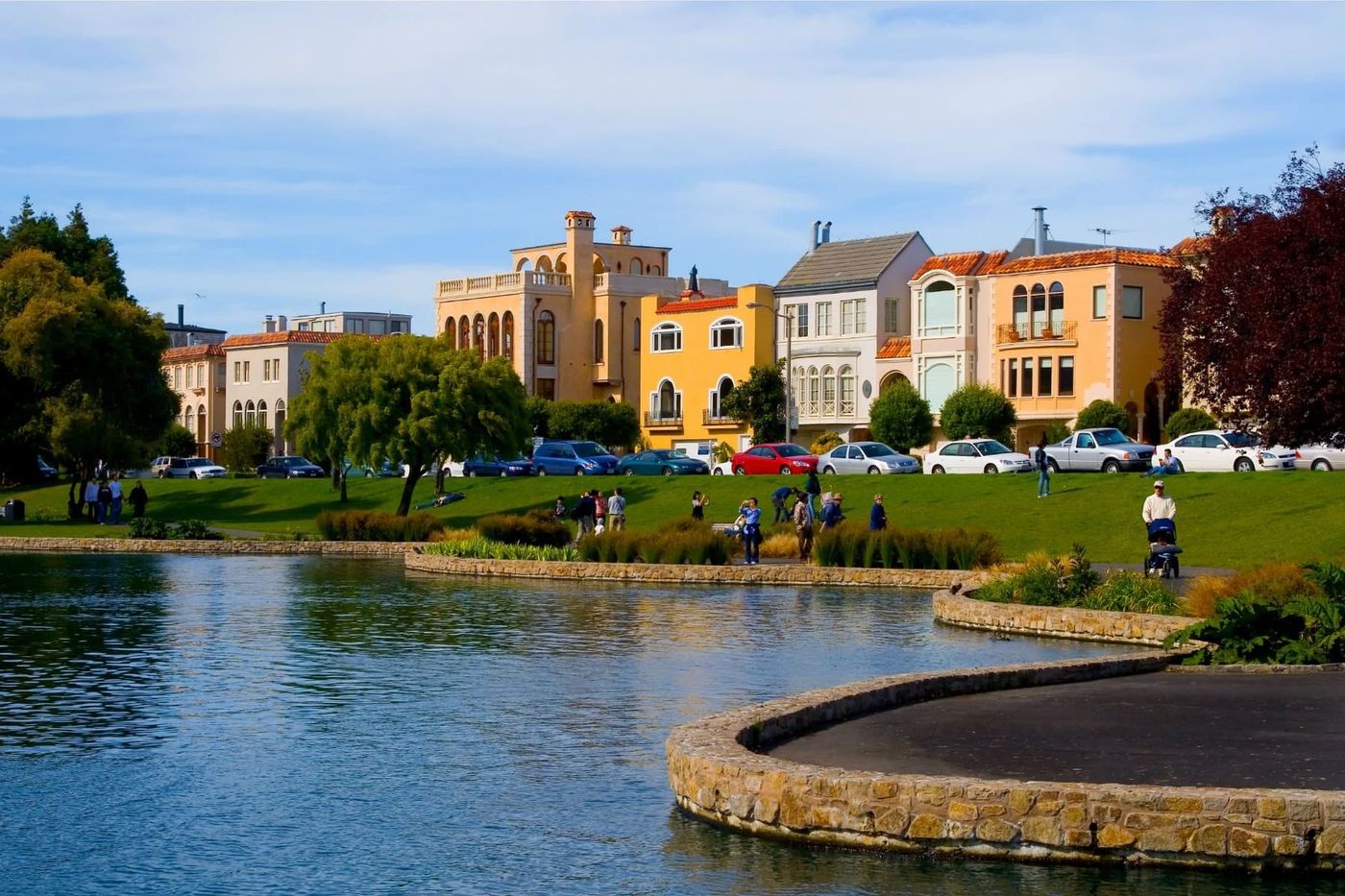
The Marina is where San Francisco runs out of land. It was filled in for the 1915 Panama-Pacific International Exposition, built out with Mediterranean and Art Deco homes in the 1920s and 30s, and has been one of the most wanted addresses on the north waterfront ever since. The reputation is young and social. The housing stock is solid, elegant and expensive.
The Neighborhood Block by Block
Marina Style, Corner by Corner
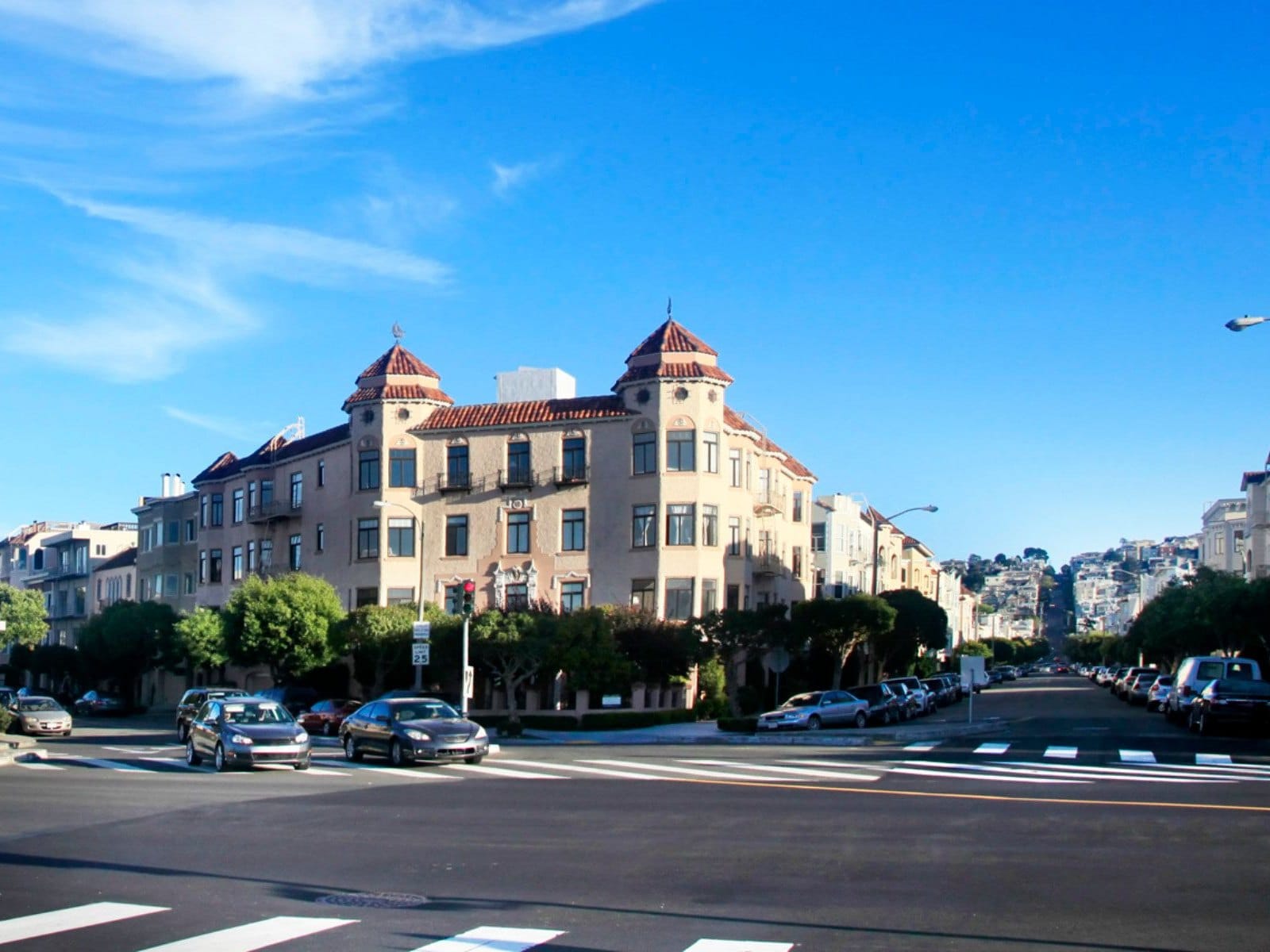
Stucco, tile roofs, rounded bays and Art Deco details. Most buildings went up between the wars, which is why whole blocks feel of a piece. Single-family homes and small condo buildings share the same streets.
A Marina Corner Building in the Mediterranean Style. photo: matt fuller
Fort Mason Is the Front Yard
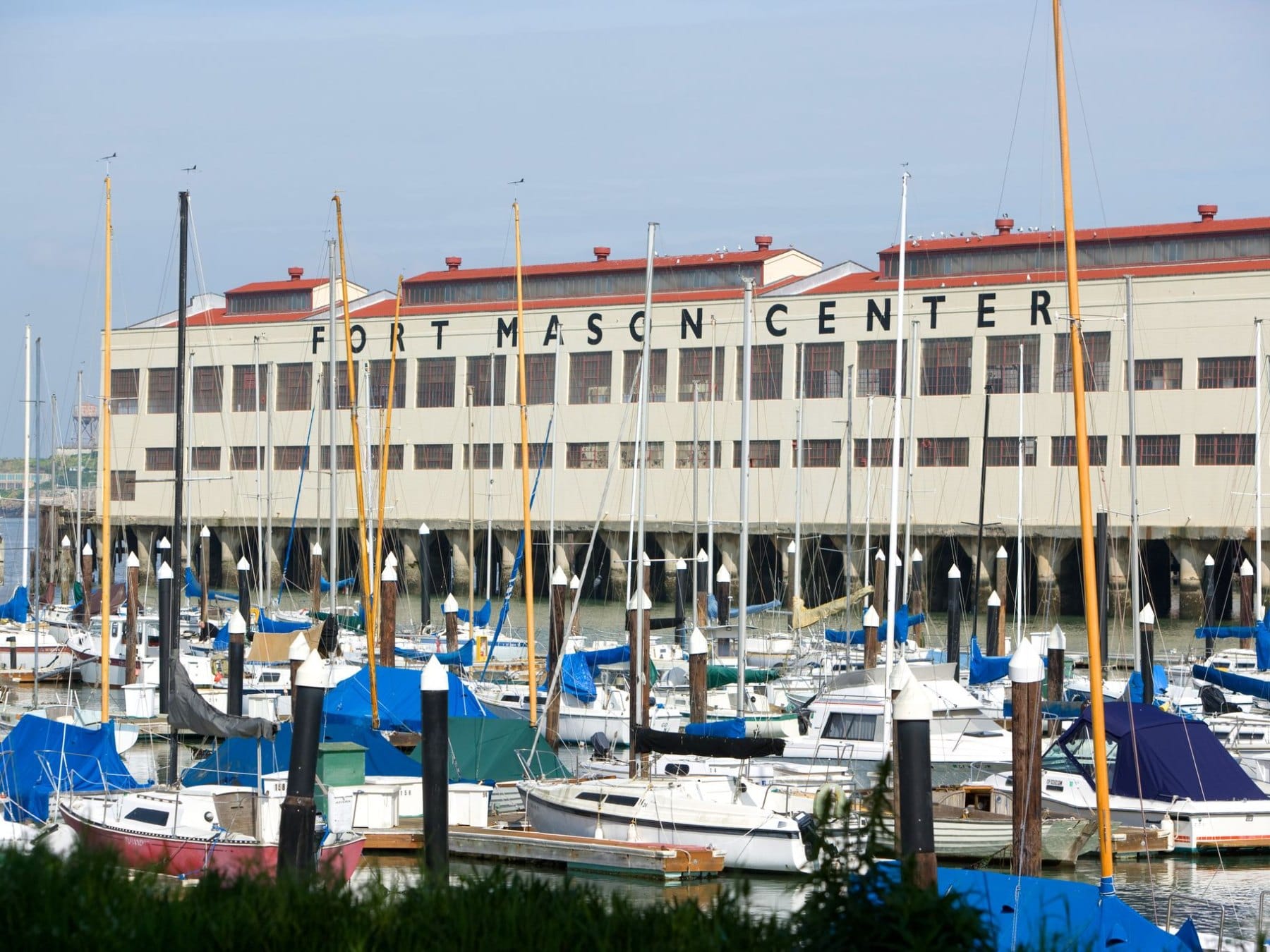
The old Army piers at Fort Mason are now an arts and events center, with sailboats tied up in the harbor out front. Farmers markets, festivals, theater and food all land here.
Sailboats at Fort Mason Center. photo: matt fuller
Green Space on Every Side
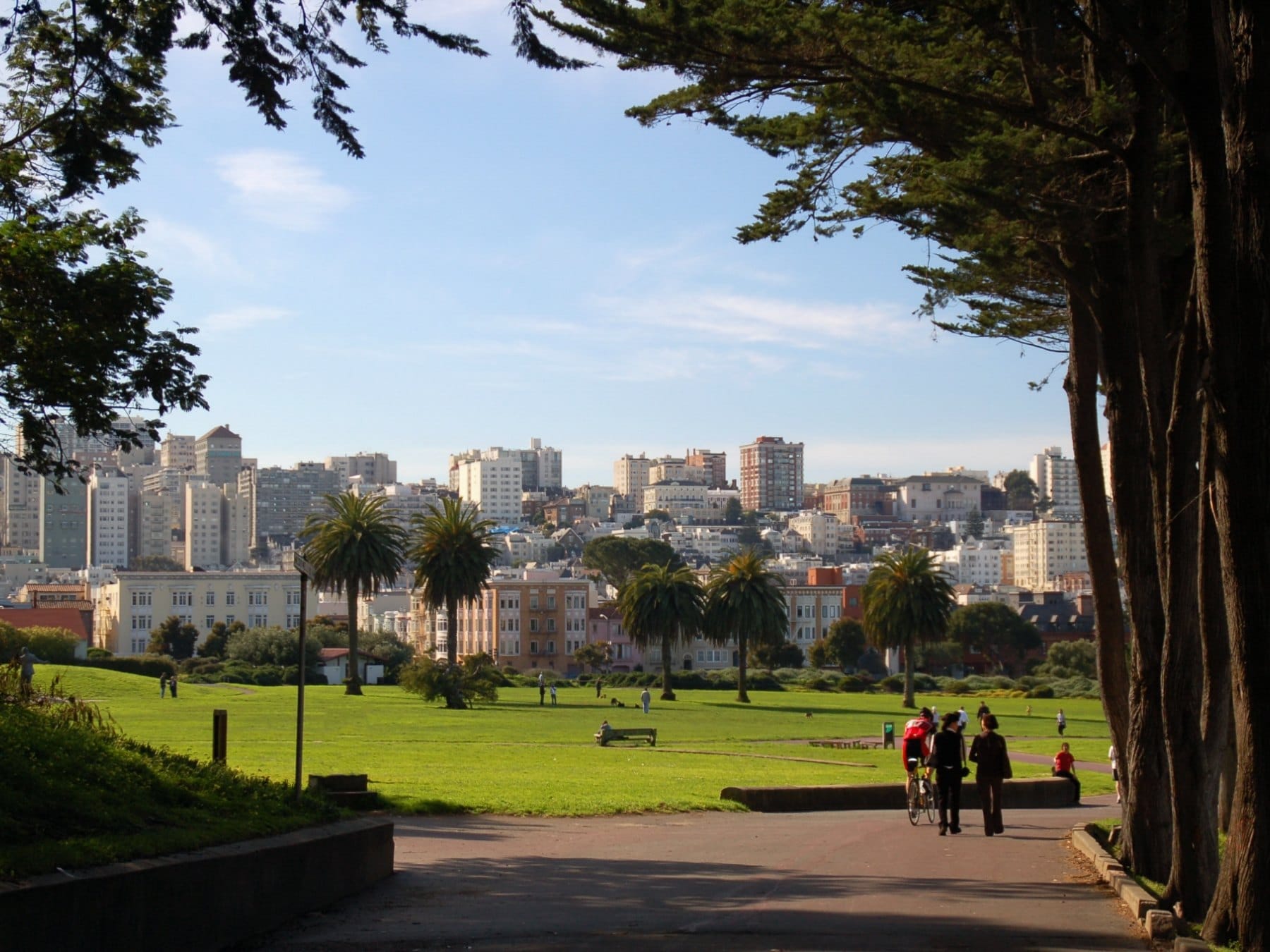
Between Fort Mason, the Marina Green and Crissy Field, most walks start right outside the front door and end at the water.
The Great Meadow at Fort Mason. photo: matt fuller
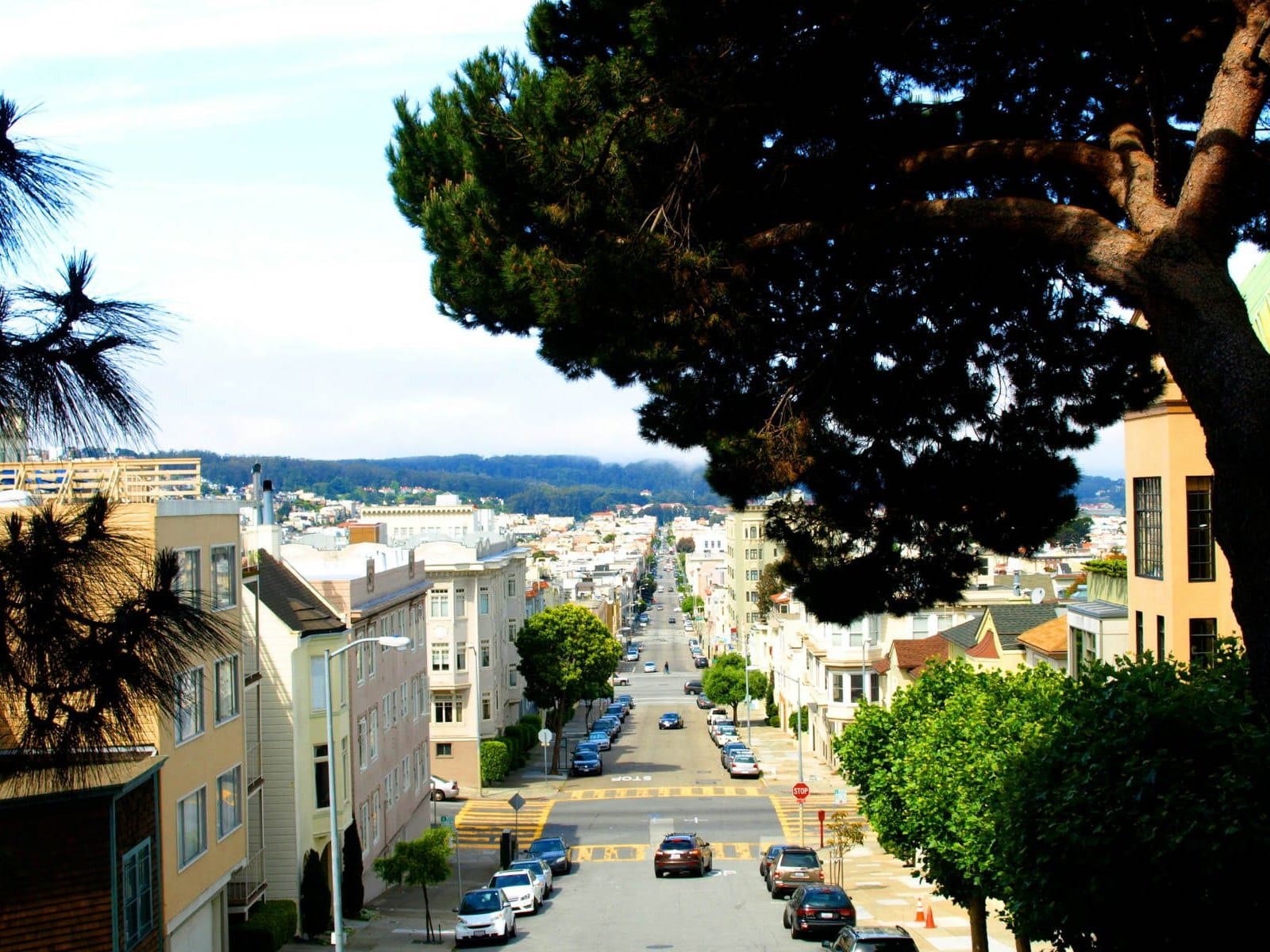
Chestnut Street Runs Down to the Water
From the top of Russian Hill, Chestnut Street drops straight toward the Marina and the bay. Its shopping stretch through the Marina is the neighborhood’s main street.
Chestnut Street from Russian Hill Toward the Marina. photo: matt fuller
The Longer Story
The Homes in Detail
The Marina mixes single-family homes with condominiums in small and mid-sized buildings. The signature is the Marina style: stucco facades, curved bay windows, tile roofs and Art Deco trim, most of it built in the 1920s and 30s.
Homes along the Marina Boulevard waterfront and near the Palace of Fine Arts sit at the top of the price range.
Built on Fill
Much of the Marina was filled in for the 1915 Panama-Pacific International Exposition, in places with rubble from the 1906 earthquake. In the 1989 Loma Prieta earthquake, parts of it liquefied and buildings collapsed.
That is not a reason to skip the neighborhood. It is a reason to read the disclosures, ask about soft-story and foundation work, and get the right inspections. We walk buyers through exactly that.
Getting Around
The Marina is one of the flattest neighborhoods in the city, which makes it great for runners, walkers and bikes. Transit is Muni buses rather than rail.
North Bay commuters have a direct run to the Golden Gate Bridge. Heading south or east to the Bay Bridge or 280 means crossing town.
The Waterfront
The Marina Green, the yacht harbors, Crissy Field and Fort Mason line the north edge of the neighborhood. The Palace of Fine Arts, also built for the 1915 Exposition, anchors the west end.
Questions We Hear
Is the Marina Safe in an Earthquake?
The Marina is largely built on fill, and parts of it liquefied in the 1989 Loma Prieta earthquake. Since then many buildings have been retrofitted. Each property is different, so ask for the seismic and foundation history and get the right inspections before you buy.
What Kinds of Homes Are in the Marina?
Mostly 1920s and 30s Mediterranean and Art Deco homes and small condo buildings, plus some mid-sized apartment buildings. Single-family homes and condos sit side by side on most blocks.
How Do People Get Around Without a Car?
On foot and by bike, mostly. It is flat, Chestnut Street covers daily errands, and Muni buses connect to downtown. There is no rail line in the neighborhood.
Is the Marina Only for Young Renters?
No. The rental scene is lively, but the Marina has long-time owners, families and plenty of people who moved here for the water and stayed.
What Are the Average Home Prices in the Marina?
Prices in the Marina move block by block and season by season, so a single average hides more than it tells. Our Market Notes track current values across the city. For a read on a specific home or street, ask us: we’ll pull the recent sales and tell you what they mean.