What Homes Sell For
Recent Sales
Median sale prices, last 12 months · Oct 2025 – Oct 2026
- Houses
- $3,300,000
Sales in MLS neighborhood 4C (Forest Hill) reported to the San Francisco MLS, including off-MLS sales; known below-market-rate (BMR) sales excluded. Medians need at least 5 sales. Updated monthly; deemed reliable but not guaranteed. Compare every neighborhood on the price map or ask us what a specific home is worth.
The Good
- A planned residence park with winding, landscaped streets and stairways.
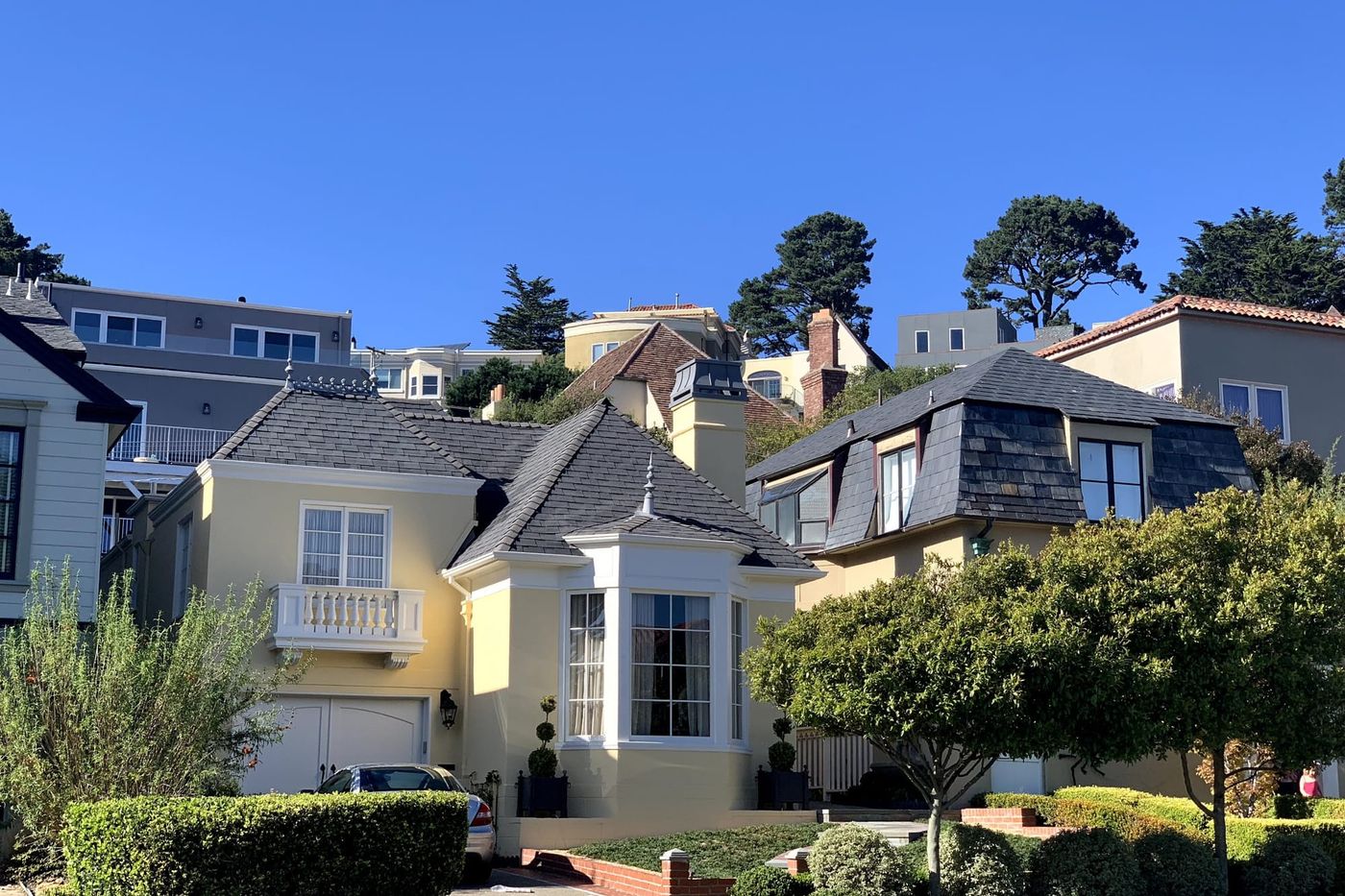
- Detached homes in a wide range of styles, from Arts and Crafts to California Modern.
- The Forest Hill and West Portal Muni Metro stations put downtown within reach without a car.
- West Portal and the Inner Sunset are both close for shops and dinner.
- Prices sit well above the city median, which is good news for owners.
The Tradeoffs
- Hills and curves make walking scenic but steep.
- No commercial street inside the neighborhood.
- Fog rolls through regularly.
- Inventory is thin and good houses do not last long.
Forest Hill broke ground in 1912 on a plan by landscape architect Mark Daniels, who laid out curving streets that follow the hill instead of fighting it. The balustrades, urns and stairways from the original plan are still here, and so is Bernard Maybeck’s 1919 clubhouse.
The Neighborhood Block by Block
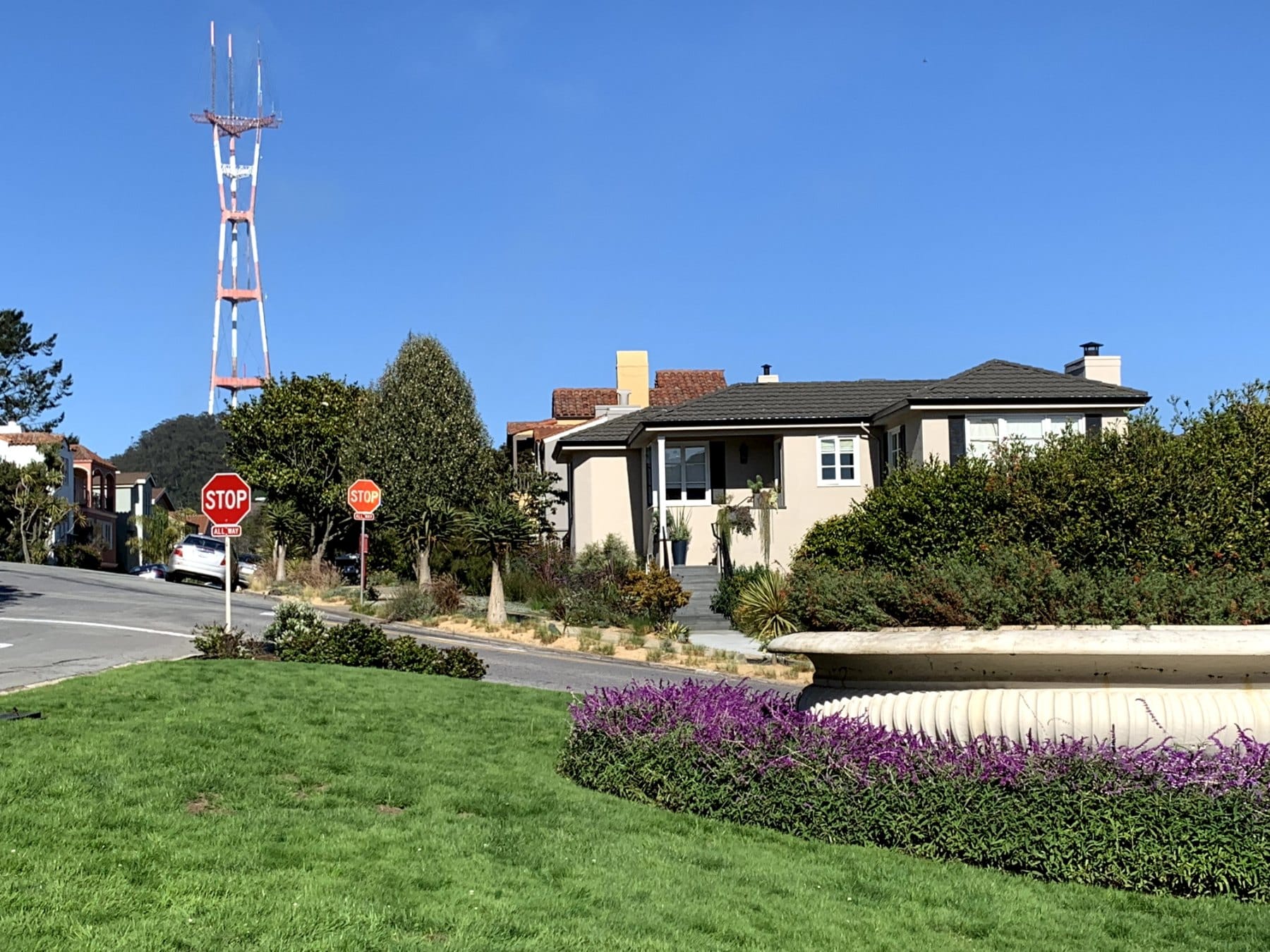
Sutro Tower Over the Rooftops
Forest Hill sits on the west slope below Mount Sutro and Twin Peaks, so the tower is a near-constant landmark over the gardens and rooflines.
Sutro Tower Above Forest Hill. photo: matt fuller
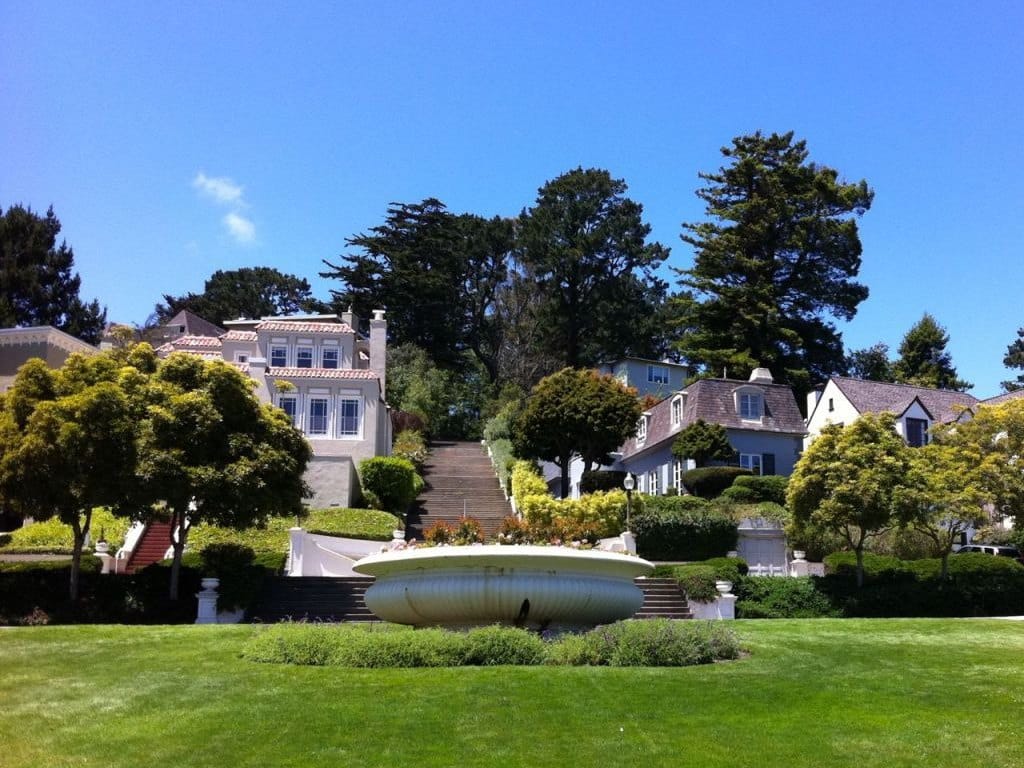
Stairways, Urns and Lawns
The original plan connected the curving streets with grand stairways, balustrades and urns, many of them still in place. Some of the best views in the neighborhood are from the middle of a staircase.
A Forest Hill Stairway Above a Lawn and Fountain. photo: matt fuller
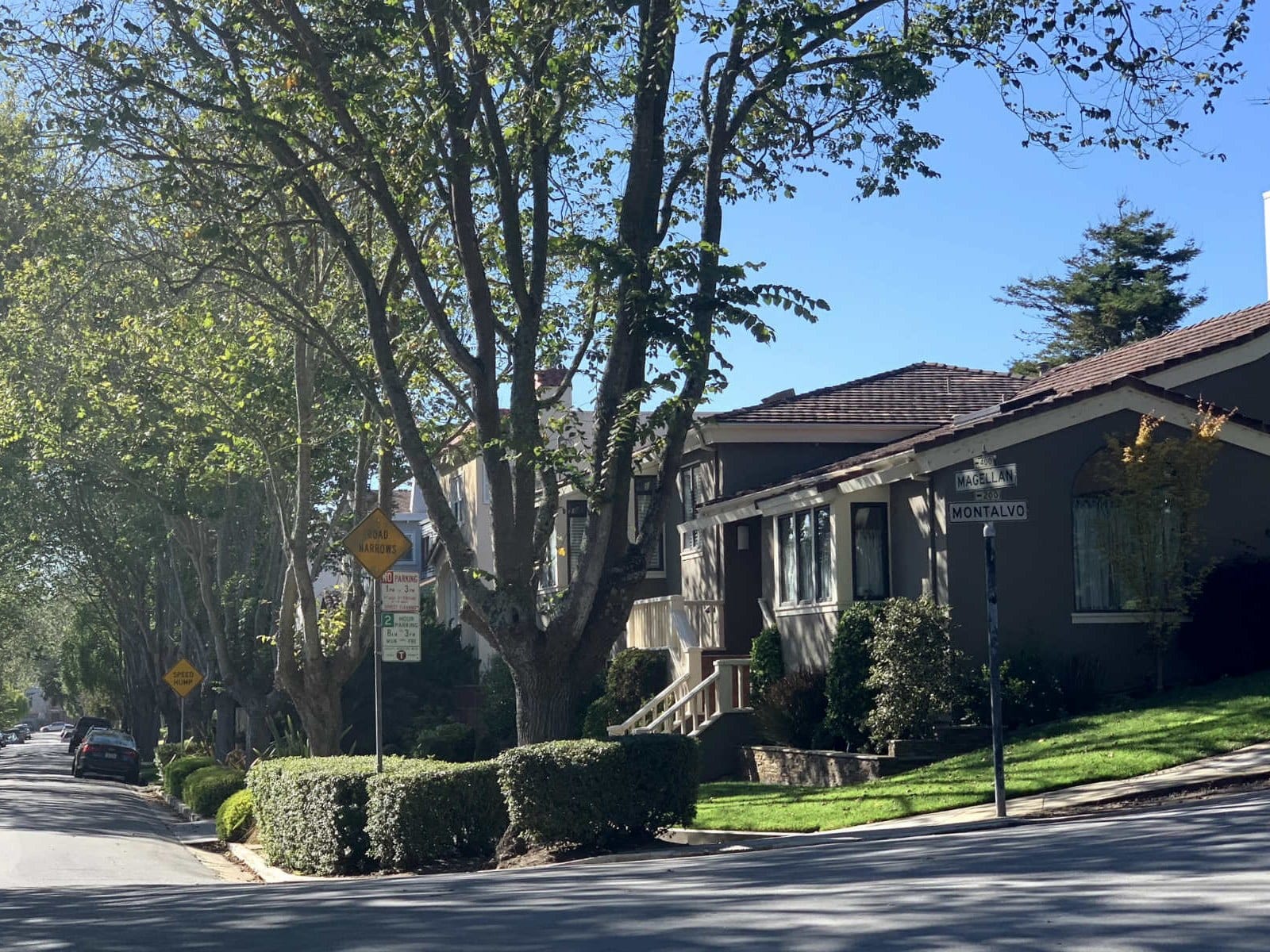
Streets That Follow the Hill
Mark Daniels laid out the streets to curve with the topography. Mature trees, deep setbacks and stairways connect the blocks.
A Tree-Lined Forest Hill Street. photo: matt fuller
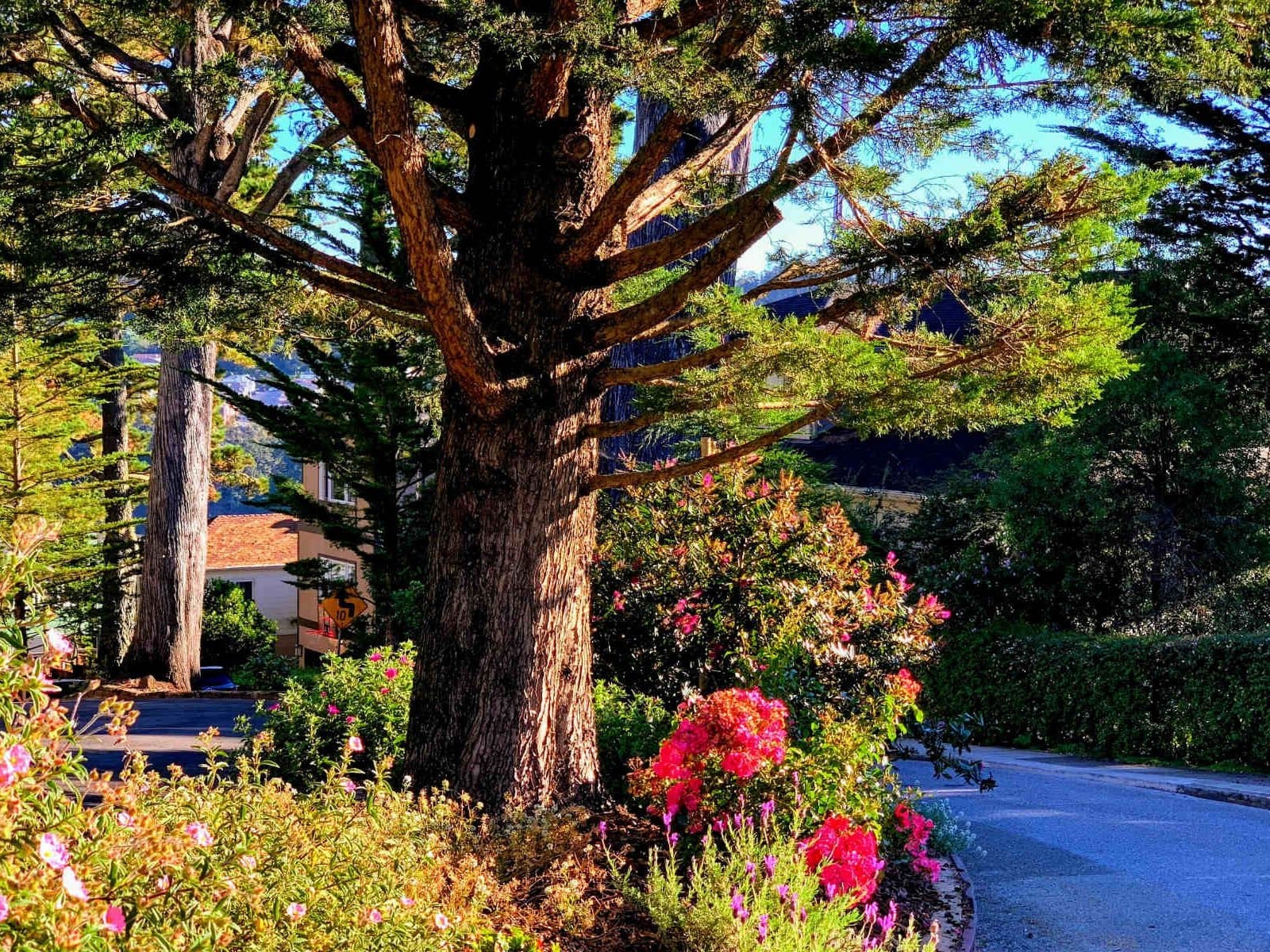
Gardens Under the Cypress
Mature cypress and pine shade the corners, and the gardens beneath them get serious attention. The forest in the name is not decorative.
A Garden Under the Cypress in Forest Hill. photo: matt fuller
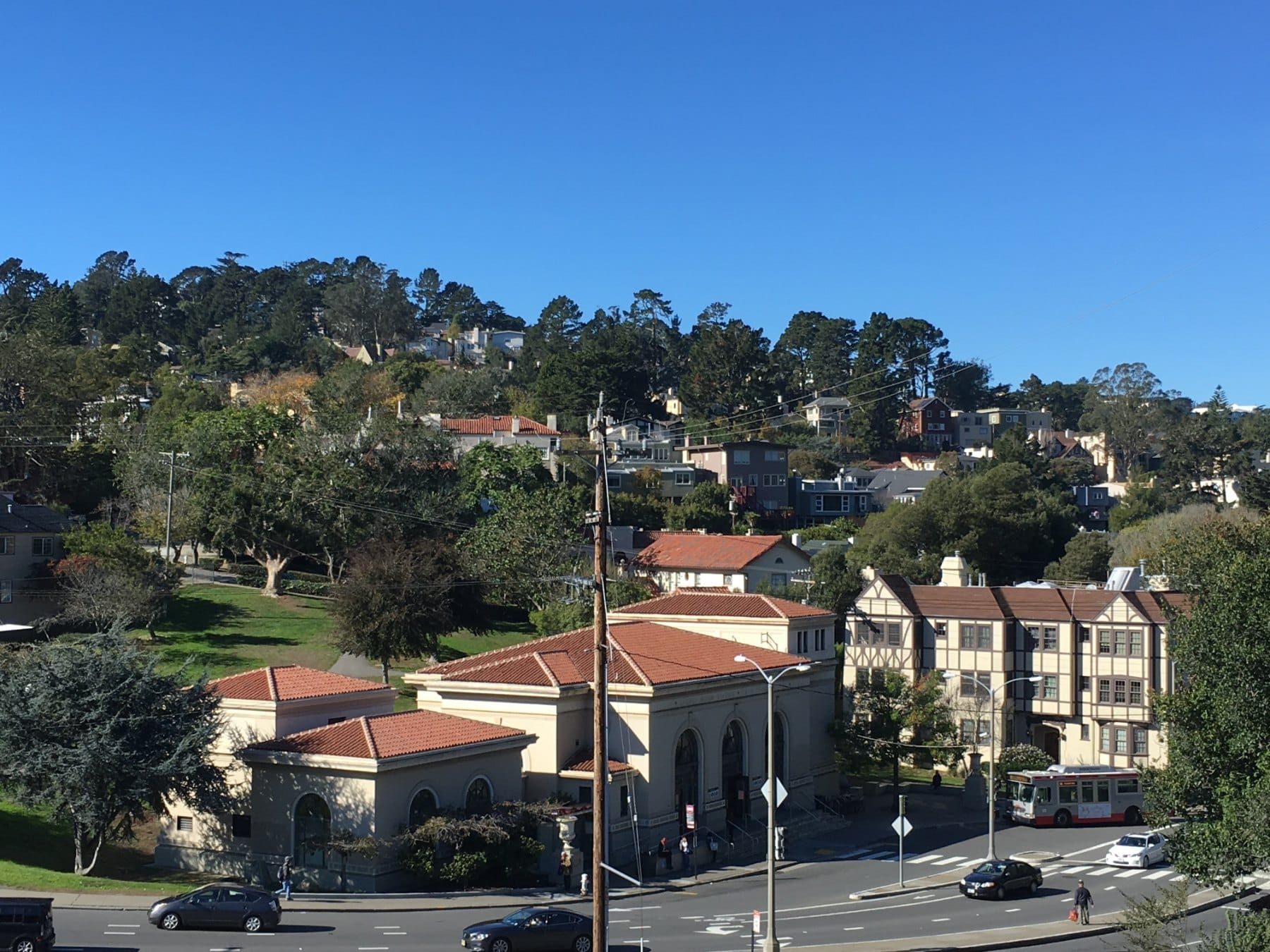
Downtown Is One Train Away
The Forest Hill Muni Metro station sits at the foot of the neighborhood, with West Portal station a short walk away. Trains run straight downtown through the Twin Peaks Tunnel.
Looking Across Forest Hill. photo: matt fuller
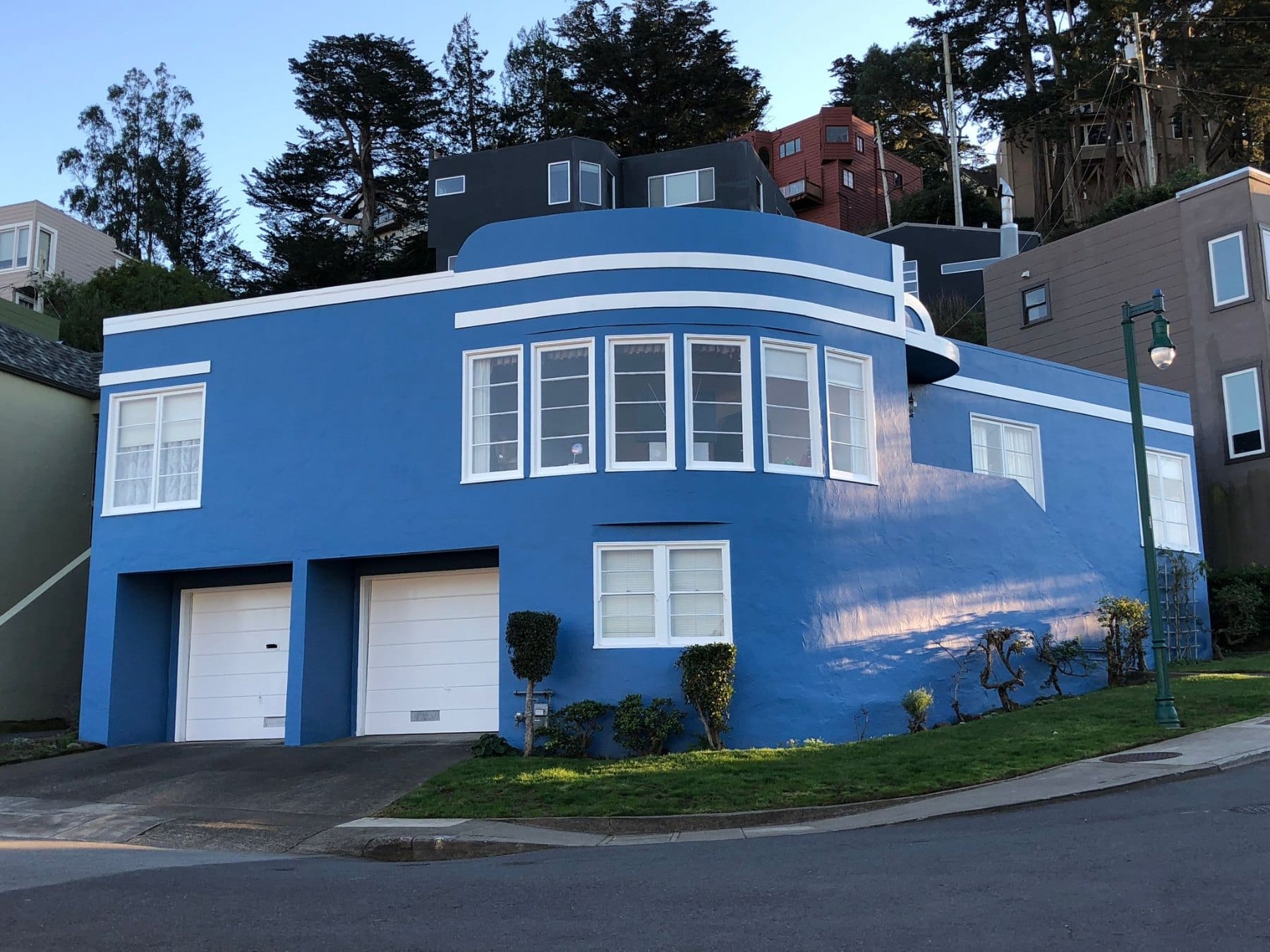
Forest Hill Extension Next Door
Across the line, Forest Hill Extension (MLS 4j) picks up the curving streets with a later, more modern mix, including Streamline Moderne houses like this one.
A Streamline Moderne House in Forest Hill Extension. photo: matt fuller
The Longer Story
The Plan
Developers broke ground in 1912 on a plan by landscape architect Mark Daniels. Many original features remain, including ornamental balustrades, urns and stairways.
The Homes in Detail
Styles range from Neoclassical and Cotswold Cottage to Arts and Crafts, Prairie, Edwardian and California Modern. Bernard Maybeck designed the Forest Hill Clubhouse, built in 1919, along with several houses in the neighborhood.
Getting Around
Forest Hill and West Portal Muni Metro stations connect to downtown, and Muni connects to BART. 19th Avenue is the route by car to the Peninsula, the airport and the Golden Gate Bridge.
Questions We Hear
Are There Any Notable Historical Landmarks or Sites in Forest Hill?
Developers broke ground in Forest Hill in 1912, with a plan designed by landscape architect Mark Daniels. You can still find many of the plan’s original features including ornamental balustrades, urns, artistic embellishments, and numerous staircases throughout the neighborhood, all provided by the famed Sarsi studios.
The homes in Forest Hill represent a range of architectural styles including Neoclassical, Cotswold Cottage, Arts and Crafts, Prairie, Edwardian, and California Modern, all surrounded by the natural harmony of plants, trees, and gardens.
Forest Hill is well known for three structures by Bernard Maybeck, the renowned architect of the
Palace of Fine Arts. You can still gaze upon his Arts and Crafts gems like the Forest Hill Clubhouse
(built in 1919), 270 Castenada Avenue (1916), and 51 Sotelo Avenue (1914).
What Is There to Do in Forest Hill?
An oasis from the urban hustle and bustle of the City, Forest Hill is just blocks from the charming shops, restaurants, and businesses of West Portal Avenue, and less than a mile from both the Chinese markets of Irving Street and the eclectic shops and exceptional restaurants of The Inner Sunset. Union Square and the Financial District are less than 20 minutes away by MUNI train from the Forest Hill or West Portal underground stations; and for trips farther afield, MUNI connects to BART. Nineteenth Avenue provides easy access by car to the Peninsula and San Francisco Airport to the south, and to the counties of Marin, Sonoma, Napa, and Mendocino to the north.
How Does the Community Vibe in Forest Hill Contribute to its Real Estate Appeal?
Winding, landscaped and heavily treed streets follow the hill’s contours, with charming scenes of natural beauty that open here and there to spectacular vistas of the Pacific Ocean, the San Francisco Bay, and the Golden Gate Bridge.
Forest Hill Clubhouse is an architectural gem and a bustling community center for the neighborhood. Located in the heart of Forest Hill, the clubhouse hosts events like the annual Easter Egg Hunt, summer barbeques, children’s Halloween Party, and the yearly Holiday Party. The clubhouse also hosts concert and solo performances by local theater productions and artists.
What Are the Average Home Prices in Forest Hill?
Prices in Forest Hill move block by block and season by season, so a single average hides more than it tells. Our Market Notes track current values across the city. For a read on a specific home or street, ask us: we’ll pull the recent sales and tell you what they mean.